
Quick Overview
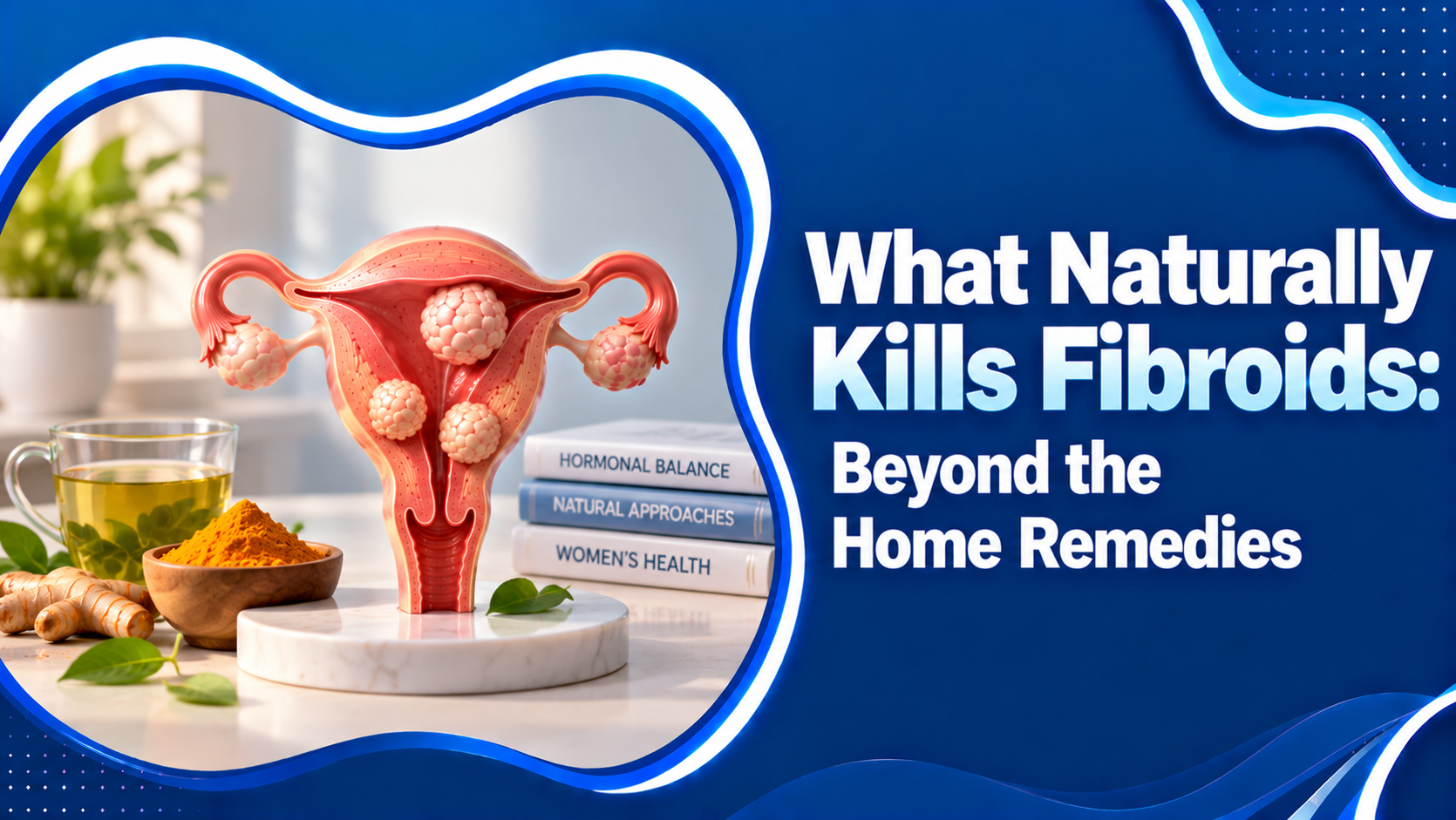
Instead of listing teas or diets, this blog takes a different approach to what naturally kills fibroids, it looks at the actual biology. Fibroids grow because of specific hormones, and understanding that relationship explains the one genuine natural process linked to fibroid shrinkage, why it happens, and why it isn’t something you can simply trigger on demand.
Fibroids Aren’t Random, They’re Hormone-Dependent
To understand what naturally kills fibroids, or more accurately, what naturally shrinks them, you first need to understand why they grow in the first place. Fibroids are sensitive to two hormones: estrogen and progesterone. During the reproductive years, when these hormones are at their highest, fibroids tend to grow. This isn’t a theory, it’s a well-documented pattern seen consistently across research on uterine fibroids.
This hormone dependency is actually the key to the whole story. If fibroids grow because of hormones, it makes sense that a major shift in those hormones would affect them too.
The One Genuine Natural Process: Menopause
Here’s the most medically accurate answer to what naturally kills fibroids: nothing kills them outright, but menopause is the one natural biological process consistently linked to fibroid shrinkage. As women approach menopause, the ovaries gradually reduce their production of estrogen and progesterone. Once menopause is fully reached, defined as 12 months without a period, hormone levels drop significantly.
Because fibroids depend on these hormones to grow, this decline often causes them to shrink, sometimes described by doctors as fibroids “going to sleep.” Many women notice their symptoms, like heavy bleeding or pelvic pressure, ease considerably during this transition.
Why You Can’t Simply “Trigger” This Process Early
This is where a lot of natural remedy claims go wrong. Menopause isn’t something you can induce through diet, herbs, or supplements. It’s a gradual biological transition tied to ovarian aging, and it happens on its own timeline, typically between ages 45 and 55. There’s no verified natural method to speed this up specifically to shrink fibroids faster.
This is an important distinction from what most online content suggests. The shrinkage isn’t caused by a specific food or remedy, it’s caused by the body’s natural hormonal decline, a process that unfolds over years, not days or weeks.
What Naturally Kills Fibroids: A Clarifying Table
| Common Belief | What’s Actually True |
| Certain teas or herbs shrink fibroids | No verified biological mechanism supports this |
| A specific diet “kills” fibroid tissue | Diet may support overall health, but doesn’t directly shrink fibroids |
| Fibroids shrink because of a home remedy | Fibroids shrink mainly due to declining estrogen and progesterone |
| Menopause guarantees fibroids disappear completely | Menopause often shrinks fibroids, but doesn’t always eliminate them fully |
| Once menopause starts, fibroids stop being a concern | Fibroids can occasionally persist or even grow after menopause |
An Important Twist Many Articles Miss
Here’s something genuinely worth knowing: fibroid shrinkage after menopause isn’t guaranteed for everyone. Research shows that fibroids can sometimes persist, or even grow, after menopause. This tends to happen due to a few specific reasons:
- Hormone replacement therapy (HRT): Since HRT often reintroduces estrogen and progesterone, it can stimulate any remaining fibroid tissue.
- Estrogen from fat tissue: Even after the ovaries slow down, fat cells can continue producing small amounts of estrogen, which may keep some fibroids active, particularly in women with a higher body fat percentage.
- Individual variation: Genetics, fibroid size before menopause, and overall hormonal balance can all influence how much shrinkage actually occurs.
This is exactly why doctors don’t consider menopause a guaranteed “cure” for fibroids, even though it’s the closest thing to a genuine natural shrinkage process.
So, Should You Just “Wait It Out”?
Not necessarily, and this is an important point. Waiting for menopause isn’t a realistic or safe strategy for every woman, especially if fibroids are currently causing heavy bleeding, significant pain, or fertility challenges. Menopause can be years away for many women dealing with symptomatic fibroids right now, and living with untreated symptoms in the meantime can affect quality of life and, in some cases, lead to complications like anaemia from heavy blood loss.
Understanding the hormone connection is useful knowledge, but it isn’t a substitute for addressing symptoms that are affecting you today.
What This Means for Fibroid Management Today
If you’re dealing with fibroids now, here’s a more realistic way to think about your options:
- Hormonal therapies, prescribed by a doctor, work by influencing the same estrogen-progesterone relationship that drives fibroid growth.
- Procedures like Uterine Fibroid Embolization directly target the fibroid’s blood supply, rather than waiting for a natural hormonal shift.
- Surgical options like myomectomy remove fibroids directly when size or symptoms warrant it.
- Regular monitoring helps track whether fibroids are stable, growing, or causing symptoms that need attention.
Important Note
Please don’t rely on unverified online remedies, or simply wait for menopause, if your fibroid symptoms are currently affecting your daily life, fertility plans, or overall health. While understanding the hormonal biology behind what naturally kills fibroids is genuinely useful, it doesn’t replace proper medical evaluation and treatment. Please consult a qualified gynaecologist or fertility specialist to discuss your specific situation and the most appropriate path forward.
Final Words
So, what naturally kills fibroids? The honest, biology-based answer is that nothing truly “kills” them, but the natural decline in estrogen and progesterone during menopause is the closest thing to a genuine natural shrinkage process. Even then, it isn’t guaranteed for everyone, and it isn’t something you can speed up through diet or remedies. For fibroids causing symptoms today, proper medical evaluation remains the most reliable path forward, rather than waiting on a biological process that may still be years away.
Frequently Asked Questions (FAQs)
- Is there any confirmed natural process that shrinks fibroids?
Yes, the hormonal decline during menopause is the most medically recognised natural process linked to fibroid shrinkage.
- Can I speed up menopause naturally to shrink fibroids faster?
No, menopause is a gradual biological process tied to ovarian aging, and there’s no verified way to safely induce it early for this purpose.
- Do fibroids always disappear after menopause?
Not always. While many fibroids shrink significantly, some can persist or even grow after menopause due to factors like hormone therapy or fat tissue estrogen.
- Why do fibroids grow during reproductive years?
Fibroids are sensitive to estrogen and progesterone, which are at higher levels during the reproductive years, promoting fibroid growth.
- Can hormone replacement therapy affect fibroids after menopause?
Yes, HRT can reintroduce estrogen and progesterone, which may stimulate any remaining fibroid tissue.
- Should I just wait for menopause instead of treating my fibroids now?
Not necessarily, especially if symptoms are affecting your quality of life. Menopause can be years away, and untreated symptoms can lead to complications.
- Can body weight affect fibroid activity after menopause?
Yes, fat tissue can continue producing small amounts of estrogen, which may keep some fibroids active even after menopause.
- Is fibroid shrinkage after menopause the same for every woman?
No, it varies based on genetics, fibroid size, body composition, and individual hormonal balance.
This article is for general informational purposes only and is not a substitute for professional medical advice. Please consult a qualified gynaecologist or fertility specialist for guidance tailored to your individual situation.