
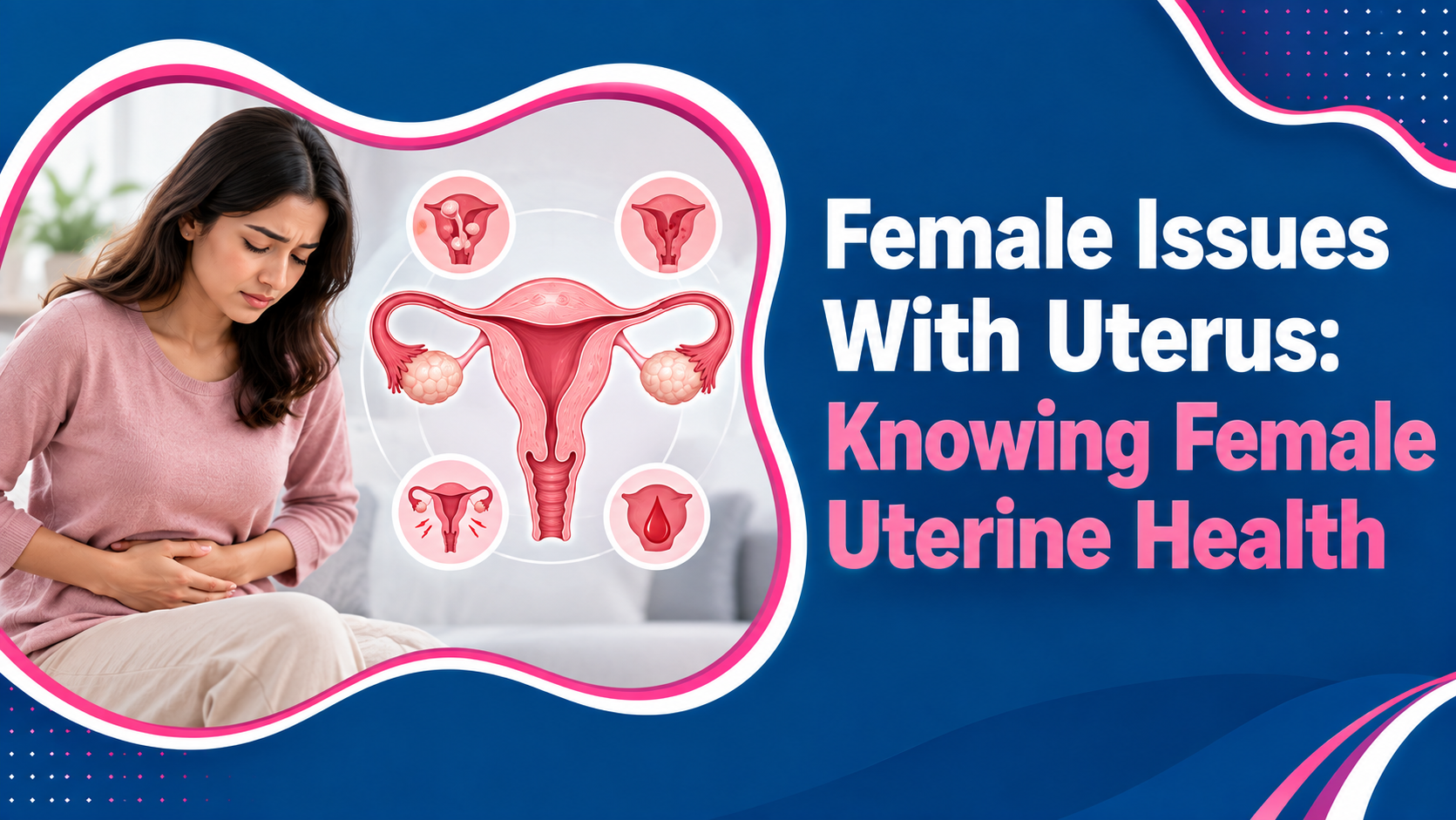
Quick Overview
This blog explains the female issues with uterus, symptoms, causes, diagnosis, treatment options and possibly effectiveness on fertility. It also helps women understand when unusual menstrual or pelvic symptoms may require medical attention.
Introduction
The uterus is an important part of the female reproductive organ. It is the organ where pregnancy develops, but problems affecting the uterus can influence periods, fertility, pregnancy and overall reproductive health. Uterine conditions are common and their symptoms can range from mild discomfort to heavy bleeding or pregnancy difficulties.
Understanding the female issues with uterus can help women recognize unusual symptoms and seek medical advice when needed.
What Is Uterus?
The uterus, commonly known as the womb is a muscular hollow organ located in the pelvis and has several functions. During the menstrual cycle, its inner lining thickens in preparation for a possible pregnancy. If pregnancy does not occur, the lining is shed during menstruation.
If an egg is fertilized, the embryo can implant into the uterine lining, where it develops throughout the pregnancy.
Because of these functions, conditions affecting the uterus can sometimes cause menstrual problems, abdominal pain, pelvic pain or fertility difficulties.
Common Female Issues With Uterus
Several conditions can affect the uterus. Some are harmless or manageable, while others require medical treatment.
1. Uterine Fibroids
Fibroids are non-cancerous growth that develop in or around the uterus. They are common during the reproductive years.
Some women with fibroids have no symptoms, while others may experience:
- Heavy periods
- Pelvic pressure or pain
- Pain during sex
- Frequent urination
- Lower back pain
2.Endometriosis
Endometriosis occurs when tissue similar to the lining of the uterus grows outside the uterus. Though the abnormal tissue is outside the uterus, it can affect one’s reproductive health.
Symptoms include painful periods, pelvic pain, pain during sex and sometimes difficulty in pregnancy.
Treatment may include medicines, hormonal therapy, pain management, or surgery depending on the severity and individual circumstances.
3. Adenomyosis
Adenomyosis occurs when tissue similar to the uterine lining grows into the muscular wall of the uterus.
It may cause:
- Heavy menstrual bleeding
- Pelvic discomfort
- Painful periods
- Enlarged or bulky uterus
4. Abnormal Uterine Bleeding
Changes in uterine bleeding can sometimes indicate a uterine or hormonal problems.
Examples include:
- Heavy periods
- Bleeding after sex
- Bleeding between periods
- Longer lasting periods
- Irregular periods
5. Uterine Infections
Infections involving the reproductive organs can affect the uterus sometimes. For example, Pelvic inflammatory disease can involve the uterus, ovaries and fallopian tubes.
6. Uterine Prolapse
Uterine prolapse occurs when the supporting muscles and tissues of the pelvic floor become weakened and allow the uterus to move downwards towards the vagina. It is common after childbirth and with increasing age, though there are other factors also that can contribute.
Symptoms may include a feeling of pressure or heaviness in the pelvis, difficulty urinating or passing stool, or a sensation that something is bulging from the vagina.
7. Congenital Uterine Abnormalities
Some women are born with the shape and structure of the uterus. Some may experience symptoms such as menstrual problems, pregnancy loss or pregnancy difficulties, while others may not notice any symptoms.
Symptoms That May Indicate Uterine Problems
Female issues with uterus do not always cause obvious symptoms. But several changes must not be ignored.
Possible signs include:
- Heavy menstrual bleeding
- Bleeding between periods
- Very painful periods
- Pain during sex
- Facing problem in getting pregnant
- Irregular periods
Having any of these symptoms does not surely indicate there are female issues with uterus. But you should consult a doctor if you experience any of these symptoms.
How Are Uterine Problems Diagnosed?
A doctor may first ask you about menstrual cycle, medical history, pregnancy history, symptoms and fertility concerns.
Depending on the symptoms, tests may include:
- Ultrasound: It may provide images of the uterus and may identify fibroids, polyps, cysts or structural abnormalities.
- Pelvic examinations: This can help assess the reproductive organs.
- MRI: This can provide more detailed images when further tests are needed.
- Hysteroscopy: A thin camera is used to look inside the uterus and can be used to treat certain problems.
The appropriate tests depend on the individual symptoms and medical history.
Can Uterine Problems Affect Problems?
Yes, some uterine problems affect fertility, although not every female issues with uterus causes infertility.
Fibroids, polyps, adenomyosis, endometriosis, and certain structural abnormalities may interfere with implantation or pregnancy in some women. The effect depends on the condition, its severity, and its location.
Hormonal treatments may be used for certain conditions, while procedures or surgery may be recommended for problems such as some fibroids, polyps, or structural abnormalities.
When To See A Doctor?
You should consult a doctor if you experience any of the symptoms of female issues with uterus such as heavy bleeding, pelvic pain, pain during sex or irregular periods.
Women who are trying to conceive without success from a pretty good time and have uterine conditions may also benefit from a fertility test.
Early tests can help in knowing the problem and can start early treatment.
Conclusion
The uterus plays a major role in pregnancy, menstruation and reproductive health. Common female issues with uterus include fibroids, polyps, adenomyosis, prolapse, infections, abnormal bleeding, etc.
Not every uterine problem causes infertility. However, persistent pain, heavy bleeding, unusual periods, or difficulty conceiving should not be ignored. A healthcare professional can determine the cause through a medical evaluation and recommend appropriate treatment.
Frequently Asked Questions(FAQs)
- What are common female issues with uterus?
Common problems include fibroids, uterine polyps, endometriosis, adenomyosis, infections, etc are associated with female issues with the uterus.
- What are the symptoms of uterine problems?
Symptoms may include pelvic pain, heavy periods, pain during sex, irregular bleeding, etc for uterine problems.
- Can uterine problems affect pregnancy?
Yes, some uterine conditions may affect pregnancy and make it harder to conceive.
- How are uterine problems diagnosed?
Doctors may use a pelvic examination, ultrasound, MRI, hysteroscopy, or other tests depending on the symptoms.
- When should I see a doctor?
Consult a doctor if you have severe pelvic pain, heavy and unusual bleeding, or difficulty in getting pregnant.