
AI in ICSI Treatment
AI in ICSI Treatment
AI in ICSI treatment combines advanced fertility care with smart technology to make the IVF process more accurate and personalized for couples. ICSI (Intracytoplasmic Sperm Injection) is a procedure where a single healthy sperm is carefully injected into an egg to support fertilization, especially in cases of male infertility.
With the support of Artificial Intelligence in Assisted Reproductive Technology, doctors can closely observe embryo development, study sperm patterns, and identify embryos with better chances of implantation. This helps fertility specialists make faster and better decisions, improve treatment planning, and provide more precise care throughout the fertility journey.
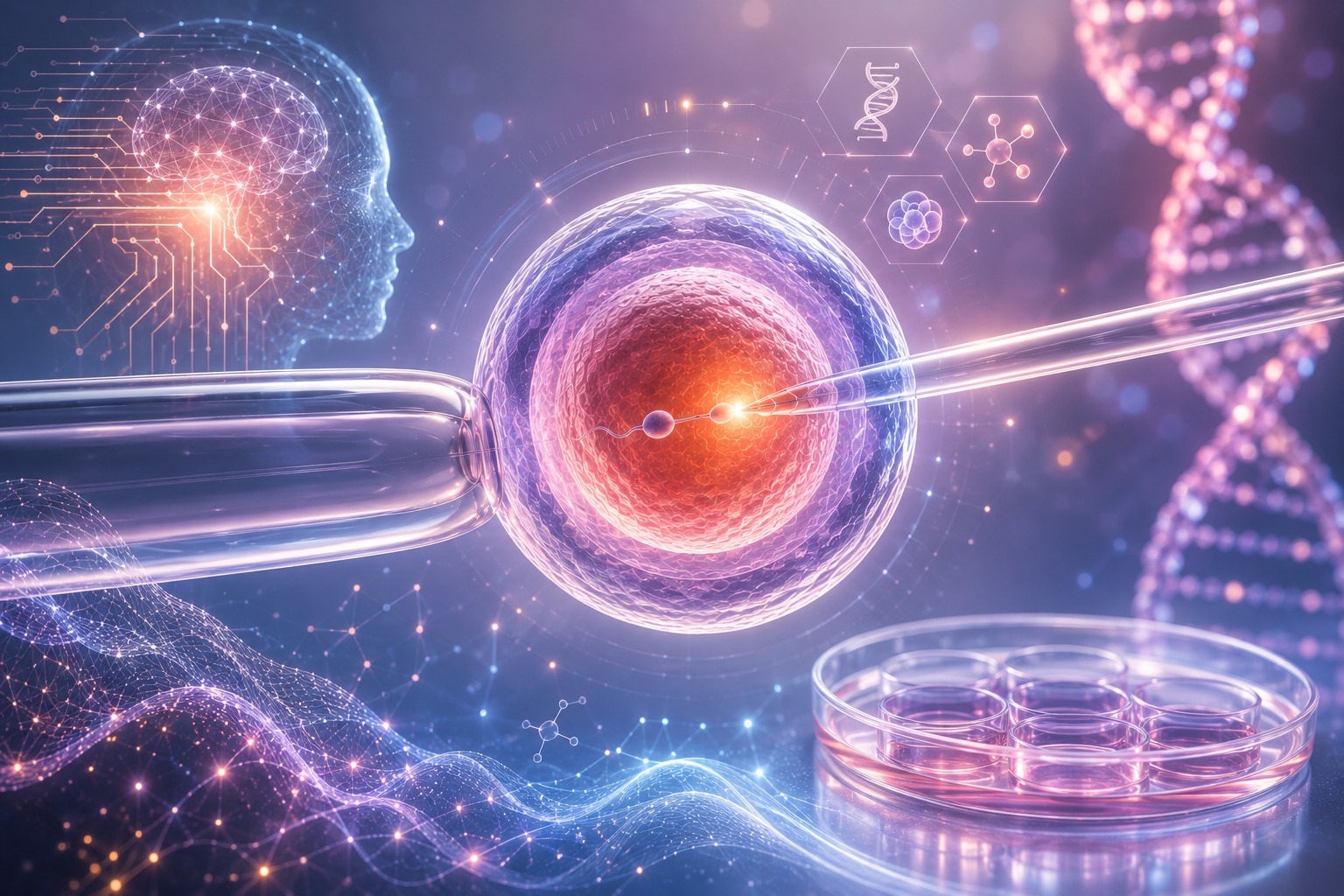
Role of AI in ICSI Treatment
AI is changing the way ICSI treatment is performed by helping doctors make more informed and accurate decisions throughout the fertility process. In modern AI fertility treatment, advanced systems analyze embryo and sperm data to support better treatment results.
- Helps doctors assess sperm quality more accurately
- Supports embryo monitoring and embryo grading
- Assists in selecting healthy embryos for transfer
- Reduces chances of manual assessment errors
- Supports personalized fertility treatment planning
- Improves monitoring during different stages of IVF and ICSI
Research in assisted reproductive technology suggests that AI-supported monitoring and embryo analysis may help fertility specialists improve treatment efficiency and clinical decision-making.
Benefits of Using AI in ICSI
The combination of ICSI treatment and AI technology is helping make fertility care smarter and more patient-focused.
- More accurate embryo assessment and monitoring
- Better support for couples facing male infertility
- Personalized treatment plans based on patient data
- Improved decision-making during IVF procedures
- Better treatment monitoring with AI in IVF
- Supports advanced fertility care with greater precision
This technology-supported approach helps fertility experts provide more reliable, safe, and personalized care to couples trying to conceive.
Step-by-Step AI-enabled ICSI Procedure
ICSI treatment involves several carefully monitored steps where AI technology can support better accuracy and treatment planning.
- Ovarian Stimulation: Fertility medicines help the ovaries produce mature eggs
- Egg Retrieval: Mature eggs are collected through a minor medical procedure
- Sperm Analysis: Healthy sperm is selected using advanced laboratory assessment and AI-supported monitoring
- ICSI Fertilization: A single sperm is directly injected into the egg
- Embryo Monitoring: Fertilized embryos are observed closely with AI-supported embryo assessment tools
- Embryo Transfer: A healthy embryo is transferred into the uterus to support pregnancy
This step-by-step process helps doctors closely monitor fertilization and embryo development for more accurate fertility care.
Who Can Benefit from ICSI Treatment?
According to fertility specialists and research in assisted reproductive technology, ICSI is commonly recommended for couples facing male infertility or fertilization difficulties during IVF treatment. Let’s understand who may benefit from AI-enabled ICSI treatment:
- Men with low sperm count
- Men with poor sperm motility or abnormal sperm shape
- Couples with failed IVF fertilization in previous cycles
- Severe male infertility cases
- Couples using frozen sperm samples
- Patients with unexplained infertility
- Couples looking for advanced AI fertility treatment options
AI-supported monitoring and analysis help doctors better understand each patient’s fertility condition and create more personalized treatment plans.
Why Choose an AI Fertility Clinic?
An advanced AI fertility clinic combines fertility expertise with intelligent technology to improve treatment planning and patient care. AI helps doctors analyze embryo development, monitor treatment progress, and support more accurate fertility decisions.
For couples searching for advanced fertility care or Artificial Insemination in New Delhi, AI-supported fertility treatment can provide improved monitoring, personalized care, better embryo assessment, and reduced chances of human error. This creates a smoother and more confident fertility journey for patients.
Final Words
The use of AI in ICSI treatment is helping to make fertility care more advanced, personalized, and accurate for couples trying to conceive. With the support of AI technology, doctors can monitor embryo development more carefully, improve treatment planning, and provide better fertility support throughout the IVF journey. At an advanced AI fertility clinic, couples receive expert care, personalized guidance, and modern reproductive technology to move closer to parenthood with greater confidence and hope.
FaQs
AI helps doctors analyze sperm quality, monitor embryo development, and support more accurate treatment decisions during the ICSI process.
Yes, AI fertility treatment is designed to support doctors with advanced monitoring and data analysis while maintaining safe and personalized patient care.
Research in assisted reproductive technology suggests that AI-supported embryo assessment and monitoring may help improve treatment planning and fertilization outcomes in some cases.
In conventional IVF, fertilization happens naturally in the lab, while in ICSI, a single healthy sperm is directly injected into the egg to support fertilization.
ICSI treatment is commonly recommended for couples facing male infertility, poor sperm quality, failed IVF fertilization, or unexplained infertility.