
Quick Overview
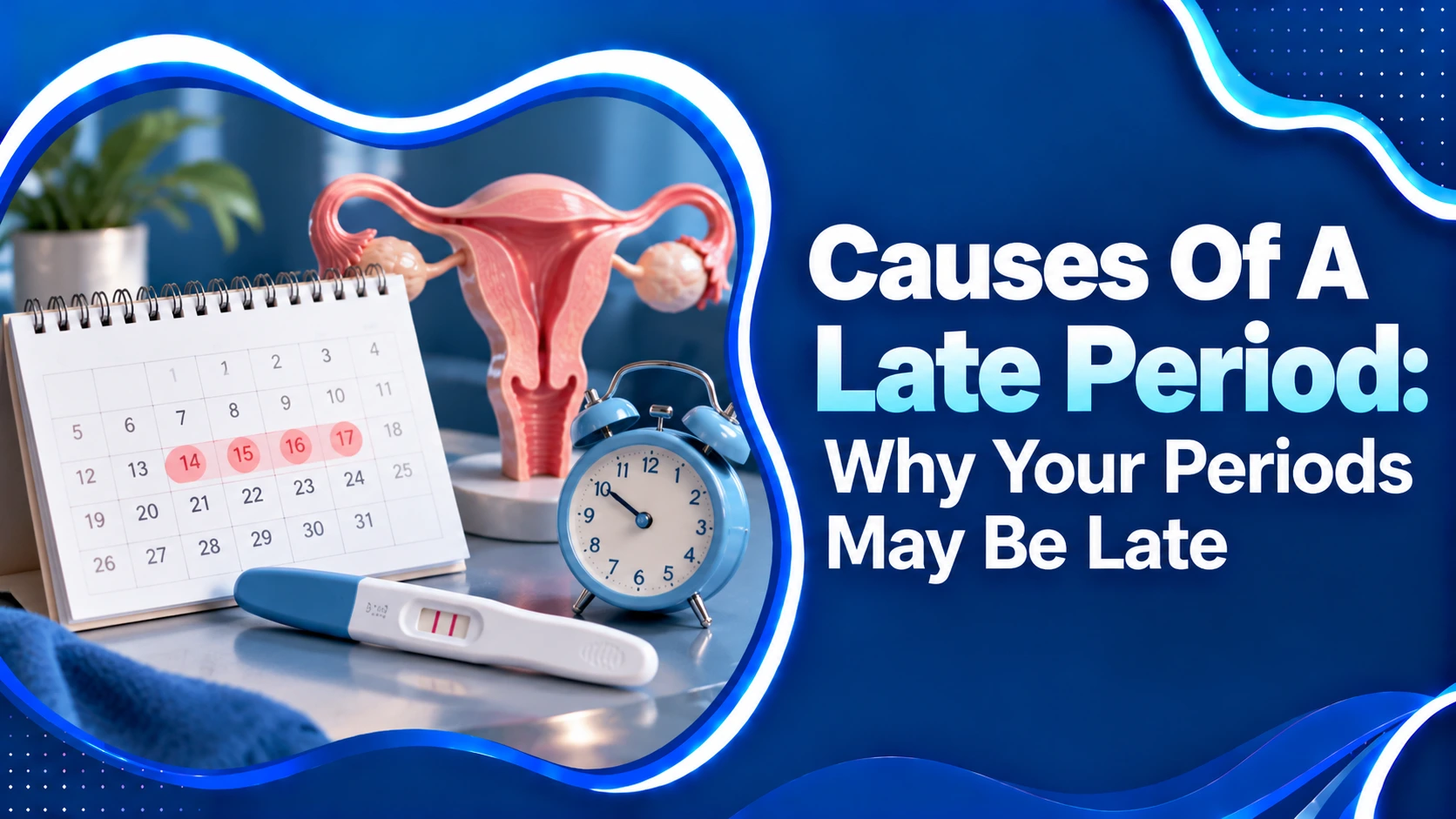
This blog includes information about causes of a late period which includes stress, pregnancy, hormonal changes, PCOS, change in weight, several medications, etc. It also explains when a late period may need medical attention and when to consider taking a pregnancy test.
Introduction
A menstrual cycle does not always occur exactly on the same date of every month. The period might be late due to normal changes in the body. If your period is later than you expected, you would wonder what could be the causes of a late period.
Pregnancy is considered as one of the most common reasons for delay or missed period, but it is not the only one. Several factors such as stress, hormonal changes, certain health conditions, change in weight and lifestyle changes could also affect the menstrual cycle.
Understanding the possible causes of a late period can help you know when it may be a temporary change and when to speak to a doctor.
What Is A Late Period?
A menstrual cycle varies from person to person and month to month. A period is considered late when it does not arrive around the expected time.
Missing a period occasionally does not indicate any serious problem. However, repeated irregular or missed periods could be a sign of a health issue that needs to be examined.
The timing of the menstrual cycle can be influenced by hormones, nutrition, reproductive health and overall well being.
There are several causes of a late period. Some of them are:
-
Pregnancy
Pregnancy is one of the first causes of a late period, especially when you have had unprotected sex and contraceptives may have failed.
Hormonal changes prevent the normal menstrual cycle from continuing after conception, so the expected period does not occur.
If your period has not arrived and there are chances of pregnancy, taking a home pregnancy test can help determine whether pregnancy could be the reason or not. If the result is negative, still your period has not arrived, you must speak to your doctor.
-
Stress
Stress could be a major causes of a late period. Emotional stress, work pressure, relationship problems or major life changes could sometimes delay periods.
Managing stress through proper sleep, physical activities and a balanced routine may help support a regular cycle.
-
PCOS
Polycystic ovary syndrome(PCOS) is a common hormonal condition that affects the menstrual cycle.
Women with PCOS may have irregular, infrequent or missed periods as ovulation may not occur regularly. Other signs include acne, increased body or facial hair and facing difficulty with weight management.
Consult a doctor if your periods are frequently irregular. They can assess the symptoms and recommend suitable tests.
-
Changes In Weight
Significant weight gain or weight loss may affect the hormones that regulate menstruation.
Very low body weight may cause periods to be irregular or stop as the body might not have the energy to support normal reproductive function. While, excessive weight can also affect hormone levels and ovulation.
-
Thyroid Problems
The thyroid gland produces the hormones that influence several body functions, including metabolism and reproductive health.
Both underactive thyroids and overactive thyroids could cause changes in menstrual pattern.
-
Breastfeeding
During the early months after childbirth, breastfeeding may affect menstrual cycles. Hormones involved in milk production could suppress ovulation, which can make periods irregular or stop for sometime. The timing of the return of periods varies from one woman to another.
-
Certain Medications
Menstrual cycle could also be affected by several medicines. For example, hormonal contraception may change the timing and amount of menstrual bleeding. Some other medicines could also influence reproductive hormones.
Speak to your doctor if your periods have become irregular or are thinking of changing medicine.
-
Excessive Exercise
Regular exercise is beneficial for you, but excessive exercise with improper nutrition intake could affect menstrual cycle.
Women who increase the amount of intense exercise suddenly, may experience delayed or missed periods.
When To Consult A Doctor?
First of all, you should not panic if your period is late. However, you should consult a doctor if your periods become irregular or you miss multiple periods without obvious reasons.
You should talk to your doctor about causes of a late period if you are experiencing the following symptoms. Those symptoms are:
- Regularly late or missed periods
- Missed periods for several months
- Bleeding between periods
- Unusual discharge or pelvic pain
- Symptoms suggesting a hormonal problem
- Heavy or unusual periods pain
What To Do If Your Periods Are Late?
If you think that pregnancy is possible, consider taking a pregnancy test as per the test manufacturer’s instructions. Keep track of your menstrual cycle, symptoms or recent lifestyle or health changes.
Don’t take hormonal medicines or treatments to bring a period without medical advice. The right treatment depends on the underlying cause.
A doctor might ask you about your menstrual history, medications, lifestyle and symptoms. Depending on the situation, they may recommend a pregnancy test, blood tests, ultrasound or other investigations.
Conclusion
There are many causes of a late period and pregnancy is just one possibility. Several factors such as stress, PCOS, breastfeeding, hormonal changes, thyroid problems, excessive exercise, etc can all influence the menstrual cycle.
An occasional delay may be normal, but if it is frequent, you must not ignore it. Keeping track of your periods and paying attention to other symptoms could help you and your doctor to understand what could be the reason.
Consult a doctor if your periods are regularly late or are concerned about change in your cycle, and they can help you with proper guidance or treatments, if required.
Frequently asked questions (FAQs)
What are the causes of a late period?
The causes of a late period are stress, pregnancy, PCOS, hormonal changes, thyroid problems, intense exercise, breastfeeding, etc.
When should I worry about a late period?
An occasional late period may not be concerning. However, if you miss your periods regularly, you should consult your doctor.
Can a late period affect fertility?
Repeatedly irregular periods sometimes indicate problems with ovulation, which can make conception more difficult. A gynaecological test can help identify the cause.
What should I do if my period is late?
If pregnancy is possible, take a pregnancy test. Track your cycle and speak with a doctor if the delay continues or happens multiple times.