
Quick Overview
Menopause usually happens gradually in your late 40s or early 50s, but for some women, it arrives much earlier. This blog looks honestly at the causes of early menopause, covering what’s medically known, what genuinely increases the risk, and why a large share of cases still don’t have a clear explanation. The goal is accurate, reassuring information, not guesswork.
Natural menopause typically happens between the ages of 46 and 55, with the average age being around 51. When periods stop earlier than this, doctors use specific terms depending on exactly when it happens. Menopause before age 45 is generally called early menopause, while menopause before age 40 is classified as premature ovarian insufficiency, sometimes still referred to as premature menopause. Understanding the causes of early menopause starts with understanding this distinction, since the two aren’t always treated as exactly the same thing.
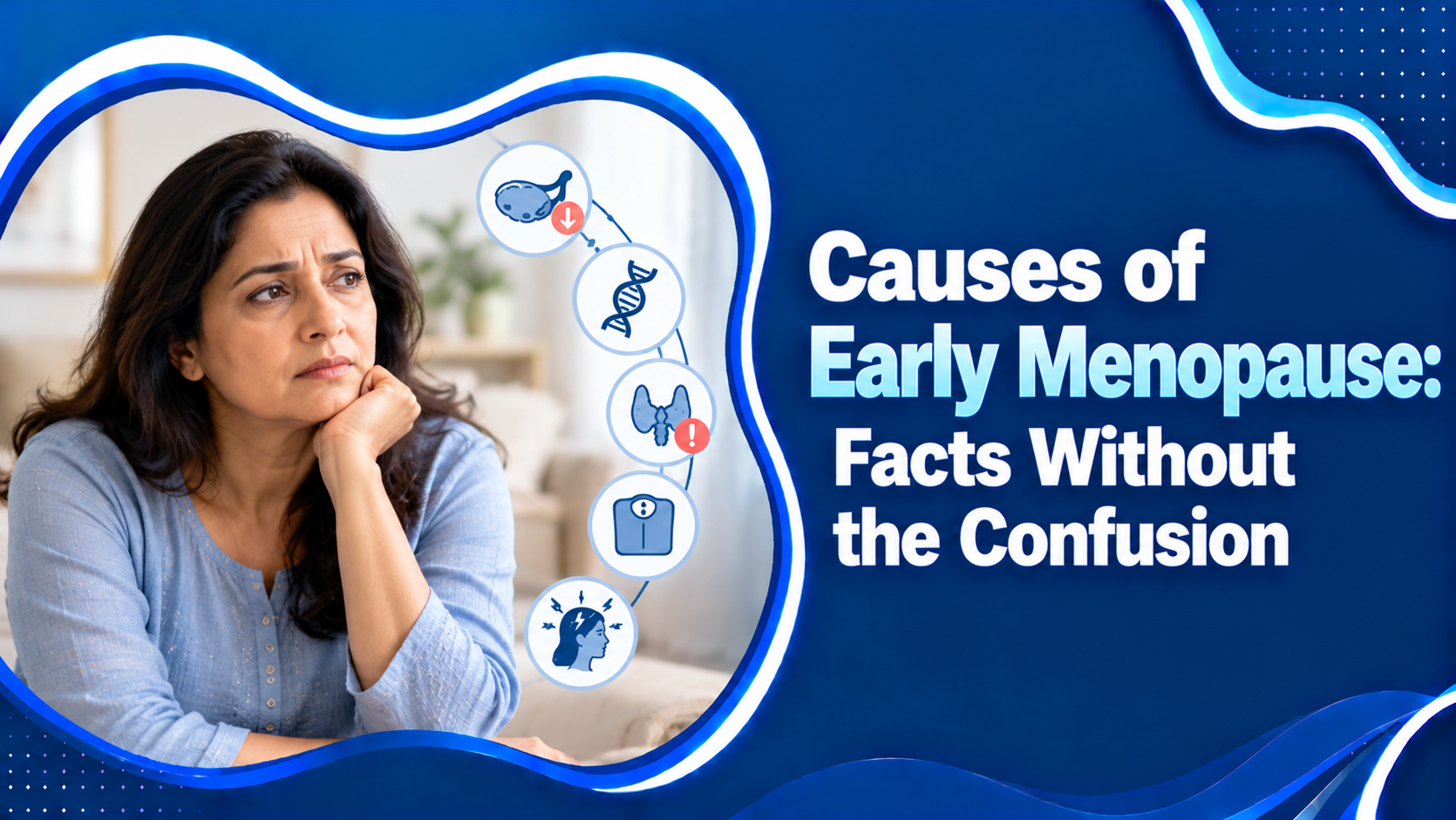
Causes of Early Menopause
Research groups the causes of early menopause into a few broad categories. It’s worth knowing upfront that in a large share of cases, no clear cause is ever identified, and that’s an important, honest part of this picture.
Genetic Factors
Certain genetic conditions are well-established causes of early menopause. This includes chromosomal differences, such as those involving the X chromosome, which can affect how the ovaries develop and function over time. A family history of early menopause, even without a specifically identified genetic cause, is also known to increase a woman’s own risk, suggesting a hereditary pattern that researchers are still working to fully understand.
Autoimmune Conditions
In some cases, the immune system mistakenly targets ovarian tissue, gradually affecting its function. Research estimates that autoimmune causes account for a meaningful portion of premature ovarian insufficiency (POI) cases, and this risk appears higher in women who already have other autoimmune conditions, such as thyroid disorders or type 1 diabetes.
Medical Treatments (Iatrogenic Causes)
Certain medical treatments can directly cause early menopause. Chemotherapy and radiation therapy, particularly when used for cancer treatment, can damage ovarian tissue and significantly reduce or stop ovarian function.
Surgical removal of both ovaries, a procedure called bilateral oophorectomy, also results in immediate menopause, regardless of the woman’s age at the time.
Lifestyle Factors, Especially Smoking
Among lifestyle-related causes of early menopause, smoking is one of the most consistently documented. Research has repeatedly linked smoking to an earlier average age of menopause, likely due to its effect on ovarian blood supply and egg cell health over time. This is one of the few causes of early menopause that’s genuinely within a person’s control.
Unknown (Idiopathic) Causes
Here’s the honest, and often overlooked, part of this picture. According to research published in the Cleveland Clinic Journal of Medicine, around 90 percent of premature ovarian insufficiency cases are idiopathic, meaning no specific cause can be identified even after thorough evaluation. This is genuinely important to know, since it means many women experiencing this simply won’t get a clear “why,” and that’s a recognised, common outcome, not a diagnostic failure.
Causes of Early Menopause: A Quick Overview Table
| Cause Category | What’s Involved |
| Genetic factors | Chromosomal differences, family history |
| Autoimmune conditions | Immune system affecting ovarian tissue |
| Medical treatments | Chemotherapy, radiation, ovarian surgery |
| Lifestyle factors | Smoking, linked to earlier menopause onset |
| Idiopathic (unknown) | No identifiable cause, accounting for the majority of cases |
Early Menopause vs Premature Ovarian Insufficiency: A Key Difference
This distinction is genuinely useful to understand. With premature ovarian insufficiency, ovarian function can be intermittent rather than completely absent, meaning some women still have occasional periods and, in a small percentage of cases, can even conceive naturally. This is different from natural early menopause, where periods stop permanently. Because of this difference, doctors sometimes use the term “insufficiency” rather than “failure,” since the situation isn’t always as fixed as the older terminology suggested.
Important Note
Please don’t try to determine the cause behind early or irregular periods stopping on your own, based only on online information, including this blog. Since the causes of early menopause range from genetic and autoimmune factors to medical treatments and unexplained cases, only proper testing, including hormone levels like FSH, can confirm what’s actually happening. Please consult a qualified gynaecologist or endocrinologist for accurate diagnosis, especially since early diagnosis genuinely matters for managing long-term health risks like bone and cardiovascular health.
When to See a Doctor
It’s worth getting evaluated if your periods stop or become significantly irregular before age 45, especially if this happens alongside symptoms like hot flashes, night sweats, or difficulty conceiving. A few situations that specifically warrant medical attention include:
- No period for four months or longer, without an obvious explanation like pregnancy
- A family history of early menopause alongside your own irregular cycles
- Undergoing cancer treatment and noticing changes in your menstrual pattern
- Menopausal symptoms appearing well before age 45
Getting evaluated early allows doctors to discuss appropriate management, including hormone therapy, which research shows is often underused in younger women despite its benefits for this specific group.
Bringing It All Together
The causes of early menopause range from genetic and autoimmune factors to medical treatments and lifestyle influences like smoking, though a large share of cases remain unexplained even after proper evaluation.
Understanding this range can help you approach the topic with realistic expectations, rather than assuming there’s always a clear, identifiable reason. If you’re experiencing signs of early menopause, proper medical evaluation remains the most reliable way to understand your specific situation and the right next steps.
Frequently Asked Questions (FAQs)
What is considered “early” for menopause to happen?
Menopause before age 45 is generally called early menopause, while menopause before age 40 is classified as premature ovarian insufficiency.
Is smoking really linked to the causes of early menopause?
Yes, research consistently links smoking to an earlier average age of menopause, making it one of the few controllable risk factors.
Can early menopause be genetic?
Yes, certain chromosomal conditions and a family history of early menopause are recognised genetic causes of early menopause.
Is there always a clear cause for premature ovarian insufficiency?
No, around 90 percent of cases don’t have an identifiable cause, even after thorough medical evaluation.
Can women with premature ovarian insufficiency still get pregnant?
In some cases, yes. Since ovarian function can be intermittent rather than fully absent, a small percentage of women may still conceive naturally.
This article is for general informational purposes only and is not a substitute for professional medical advice. Please consult a qualified gynaecologist or fertility specialist for guidance tailored to your individual situation.