
Quick Overview
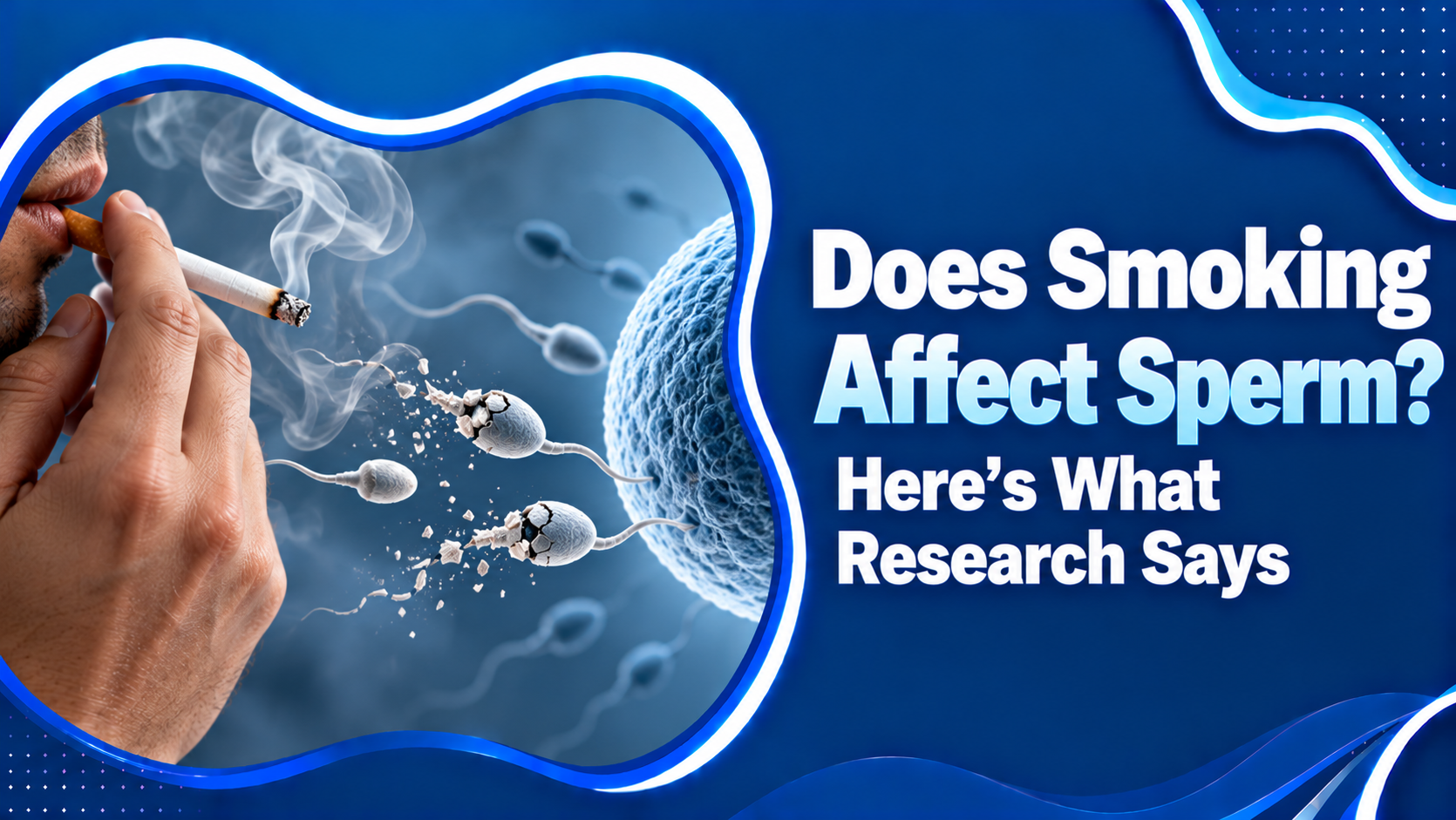
Most people know smoking is bad for general health, but fewer realise how directly smoking affect sperm quality and male fertility. This blog looks honestly at what current research shows, covering visible changes like sperm count, along with a deeper, less-talked-about issue: DNA damage inside the sperm itself.
Cigarette smoke contains thousands of chemicals, including nicotine and its byproducts, many of which can cross into the bloodstream and reach the testicles through what’s called the blood-testis barrier. Once there, these substances can interfere with sperm production and the health of individual sperm cells. This is exactly why smoking affect sperm in more ways than just the numbers on a basic semen report, and understanding this fuller picture is genuinely useful for anyone thinking about fertility.
How Smoking Affect Sperm: The Visible Changes
The most studied way smoking affect sperm is through standard semen parameters, the numbers doctors typically check during a semen analysis. A large meta-analysis combining data from thousands of participants found smokers had significantly lower sperm count, reduced motility, and more abnormal sperm shapes compared to non-smokers. These effects tend to be more pronounced in men who already have fertility difficulties, and in those who smoke moderately to heavily, rather than very light smokers.
- Sperm count tends to be noticeably lower in smokers
- Motility, the sperm’s ability to swim effectively, is often reduced
- Abnormal sperm morphology (shape) is more common among smokers
- These effects generally worsen with heavier and longer-term smoking
How Smoking Affect Sperm: The Less Obvious Damage
Here’s the part that often gets missed, and it’s genuinely important. Even when a semen analysis shows normal count, motility, and shape, smoking affect sperm at a deeper, molecular level that basic testing doesn’t capture. Several studies have found significantly higher sperm DNA fragmentation in smokers, meaning more breaks or damage in the genetic material carried inside the sperm, even when the sperm “looks” completely normal under a microscope.
Researchers believe this happens through a few connected mechanisms. Tobacco smoke reduces zinc levels in semen, an important mineral that normally helps protect sperm from oxidative damage. Smoking also increases reactive oxygen species, unstable molecules that damage cells, while simultaneously interfering with the sperm’s natural DNA repair signalling. Together, this creates conditions where sperm DNA is more vulnerable to damage than it would otherwise be.
Smoking Affect Sperm: A Quick Overview Table
| Sperm Parameter | Documented Effect of Smoking |
| Sperm count | Reduced, especially in moderate to heavy smokers |
| Motility | Decreased, affecting the sperm’s ability to swim |
| Morphology | Higher rate of abnormally shaped sperm |
| Zinc levels | Reduced, weakening natural antioxidant protection |
| DNA fragmentation | Increased, even when other parameters look normal |
| Effect severity | Generally worsens with smoking intensity and duration |
Why a “Normal” Semen Report Doesn’t Tell the Whole Story
This is worth repeating clearly, since it’s easy to misunderstand. A standard semen analysis checks count, motility, and shape, but it doesn’t measure DNA fragmentation. This means a smoker could receive a “normal” semen report while still carrying meaningfully higher sperm DNA damage, which some research links to lower natural conception rates and reduced success with fertility treatments. This is one of the more important, evidence-based reasons smoking affect sperm health in ways that aren’t always obvious from routine testing alone.
Important Note
Please don’t use this information to self-assess your own fertility or fully rule out concerns based only on a “normal” semen report if you smoke. Since smoking can affect sperm DNA even when standard parameters look fine, a proper fertility evaluation, potentially including a DNA fragmentation test, gives a more complete picture. Please consult a qualified fertility specialist or andrologist to discuss your specific situation, rather than assuming everything is fine or assuming the worst on your own.
Is the Damage Reversible?
This is genuinely encouraging news worth sharing. Since sperm is continuously produced, a cycle that takes roughly two to three months, quitting smoking can lead to measurable improvements in semen quality over time. While existing damaged sperm can’t be repaired, newly produced sperm benefit from a healthier environment once smoking stops, which is exactly why doctors often recommend quitting well before actively trying to conceive, giving the body enough time to produce a fresh, healthier batch of sperm.
Conclusion
The evidence is clear that smoking affect sperm in more ways than most people realise, from visibly lower count and motility to less obvious DNA damage that standard tests don’t always catch. The encouraging part is that this isn’t necessarily permanent, since sperm regenerate regularly, quitting smoking can genuinely improve fertility outcomes over a few months. For couples trying to conceive, this makes smoking one of the more meaningful, controllable factors worth addressing early.
Frequently Asked Questions (FAQs)
- Does smoking affect sperm count specifically?
Yes, multiple studies show smokers tend to have significantly lower sperm count compared to non-smokers, especially with moderate to heavy smoking.
- Can smoking affect sperm even if a semen analysis looks normal?
Yes, research shows smoking can increase sperm DNA fragmentation even when standard parameters like count and motility appear normal.
- How long does it take to see improvement after quitting smoking?
Since sperm take about two to three months to develop, noticeable improvements in semen quality are often seen a few months after quitting.
- Does smoking affect sperm in men who don’t have fertility issues too?
Yes, though the effects tend to be more pronounced in men who already have existing fertility difficulties.
- Is a DNA fragmentation test necessary for all smokers trying to conceive?
Not necessarily for everyone, but it may be worth discussing with a fertility specialist, especially after unexplained difficulty conceiving.
This article is for general informational purposes only and is not a substitute for professional medical advice. Please consult a qualified fertility specialist for guidance tailored to your individual situation.