
Quick Overview
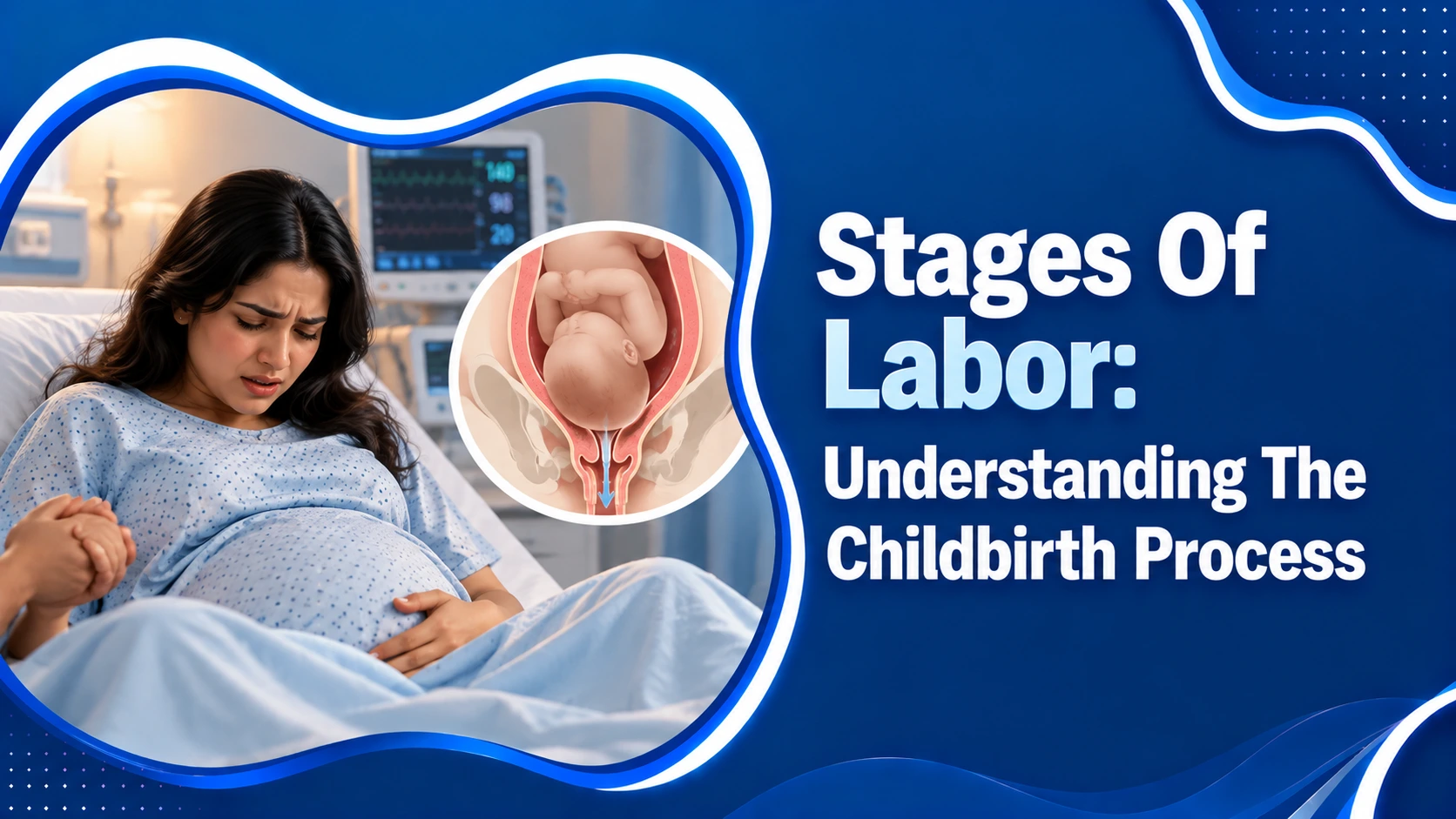
This blog includes information about 3 main stages of labor- cervical dilation, delivery of the baby and delivery of the placenta. It also explains the phases of the first stage, common signs and symptoms, what happens during each stage, how long it may take and when medical assistance is needed.
Introduction
Labor is a natural process through which the body prepares for the delivery of the baby. It involves regular contractions of the uterus, changes in the cervix and eventually the birth of the baby and delivery of the placenta. Knowing the stages of labor can help expectant mothers understand what to expect during childbirth and feel more prepared.
Labor is generally divided into three main stages. The first stage involves cervical dilation, the second stage is when the baby is delivered and the third stage involves delivery of the placenta. The first stage is further divided into early, active and sometimes transitional labor.
What Is Labor?
Labor begins when regular uterine contractions cause the cervix to soften, thin out and gradually open. The cervix needs to enlarge to approximately 10 cm before the baby can pass through the birth canal during a vaginal delivery.
Every labor experience is different. Some women may have a short labor, while others may experience contractions and cervical changes over many hours.
Signs that may indicate labor is starting includes:
- Pelvic pressure
- Lower back pain
- Passing the mucus plug
- Water breaking
- Regular contractions that become stronger and closer together
Also to note that not every woman experiences the same way.
First Stage Of Labor
The first stage of labor begins when true labor starts and continues until the cervix is fully dilated to 10 centimeters. This is usually the longest stage of labor.
It has three phases: early, active and transition.
1. Early Or Latent Phase
Early labor is the beginning phase. During this time, the cervix starts to soften, thin and open.
Contractions may initially be mild and irregular. They become more regular as the labor progresses. Some women may be able to walk, eat light foods, talk or rest between contractions, depending on their doctor’s advice.
Common experiences during early labor include:
- Mild to moderate contractions
- Lower abdominal cramps
- Pelvic pressure
- Increased vaginal discharge
For some women, early labor can last several hours or longer. It may also be difficult to determine exactly when early labor has started, particularly for first time mothers.
2. Active Labor
During active labor, the contractions generally become stronger, longer and more frequent. The cervix continues to widen towards 10 centimeters.
This is the phase where most of the women go to the hospital, depending on their birth plan and doctor’s instructions.
A woman may experience:
- Increased pelvic pressure
- Stronger contractions
- Difficulty talking through contractions
- Back pain
At this stage, pain relief options may be discussed. Depending on the birth setting, these can include breathing techniques, movement, massages, medication, etc.
3. Transition Phase
Transition is the final part of the first stage. The cervix moves from around 8 cm to fully dilated (10 cm).
Contractions are often very strong and close together during this phase. It can be both emotionally and physically intense.
A woman may experience symptoms like:
- Shaking or sweating
- Significant pelvic pressure
- Very strong contractions
- Increased emotional sensitivity
- A strong urge to push
Though transition can feel overwhelming, it is usually a relatively short part of labor. Once the cervix reaches 10 centimeters, the mother enters the second stage. One must know different stages of labor.
Second Stage of Labor
The second stage of labor begins when the cervix is fully wide and ends with the birth of the baby.
During this stage, the baby moves through the birth canal. The mother may have a strong urge to push because of the pressure from the baby’s head.
The doctor guides the mother on how and when to push. The position may vary depending on her comfort, medical condition and the recommendations of the healthcare team.
As the baby moves downward, the baby’s head may become visible at the vaginal opening. This is called crowning. Once the baby’s head is delivered, the doctor checks for the baby’s position before helping deliver the shoulders and rest of the baby.
After the birth, the baby is assessed by the healthcare team. When appropriate skin to skin contact may be encouraged.
One must keep this in mind that the length of the second stage varies between women. Different stages of labor play different roles during pregnancy.
Third Stage Of Labor
The third stage of labor begins immediately after the baby is born and ends when the placenta is delivered.
The placenta is the organ that provides nutrients and oxygen to the baby during the pregnancy. After the baby is born, the uterus continues to contract, causing the placenta to separate from the uterine wall.
The mother might experience more contractions, though they are less intense than those during the initial stages.
The doctor checks that the placenta has been delivered and monitors the mother for bleeding. Medications may sometimes be given to help the uterus contract and reduce the risk of excessive bleeding after birth. Knowing stages of labor is important for the expectant mothers.
What Happens After The Placenta Is Delivered?
After the third stage, the healthcare team continues observing the mother and the baby.
They can check:
- Vaginal bleeding
- Mother’s blood pressure
- Uterine contraction
- Baby’s heart rate and breathing
- Baby’s temperature and overall condition
If there is a tear during a vaginal birth, the doctor may repair it with stitches. The mother and the baby can then spend time together for bonding, feeding and initial newborn care. After the stages of labor, both mother and baby are kept together.
How Long Does Labor Take?
There is no fixed length of labor. It can vary based on several factors such as:
- Baby’s position
- Cervical changes
- Strength and frequency of contractions
- Whether it is the first pregnancy
- Previous childbirth history
First time mothers may experience a longer labor than women who have previously given birth, but individual experiences can differ.
When To Consult A Doctor?
Pregnant women should follow the instructions provided by the doctors.
Contact your doctor if you experience signs that may indicate labor, particularly regular contractions that become stronger and closer together.
You should also see a doctor if:
- Water breaking
- Heavy vaginal bleeding
- Severe or unusual pain
- Decreased fetal movement
Conclusion
Understanding the stages of labor can make the process of child birth easier to understand and help expectant mothers prepare for what may happen. The first stage involves cervical dilation and includes early, active, and transition phases. The second stage involves pushing and the birth of the baby. The third stage ends with the delivery of the placenta.
Though labor follows a pattern, every birth is different. The intensity of the contractions, duration, pain levels and others may differ from one woman to another. Regular communication with your doctor can help you understand your labor process and make informed decisions through childbirth. Understanding stages of labor can help in further preparations.
Frequently Asked Questions(FAQs)
- What are the main stages of labor?
The main stages of labor are cervical dilation, delivery of the baby and delivery of the placenta.
- What are the phases of the first stage?
The first stage includes early labor, active labor and transition.
- How long does labor usually last?
Labor duration varies from person to person and can depend on several factors.
- What are common signs that labor is starting?
Regular contractions, back pain, pelvic pressure, increased discharge, and water breaking can be signs.
- When to consult a doctor?
You should consult a doctor when you have regular contractions or if your water breaks, you have heavy bleeding, decreased fetal movement, or severe pain.