
 Blog Overview:
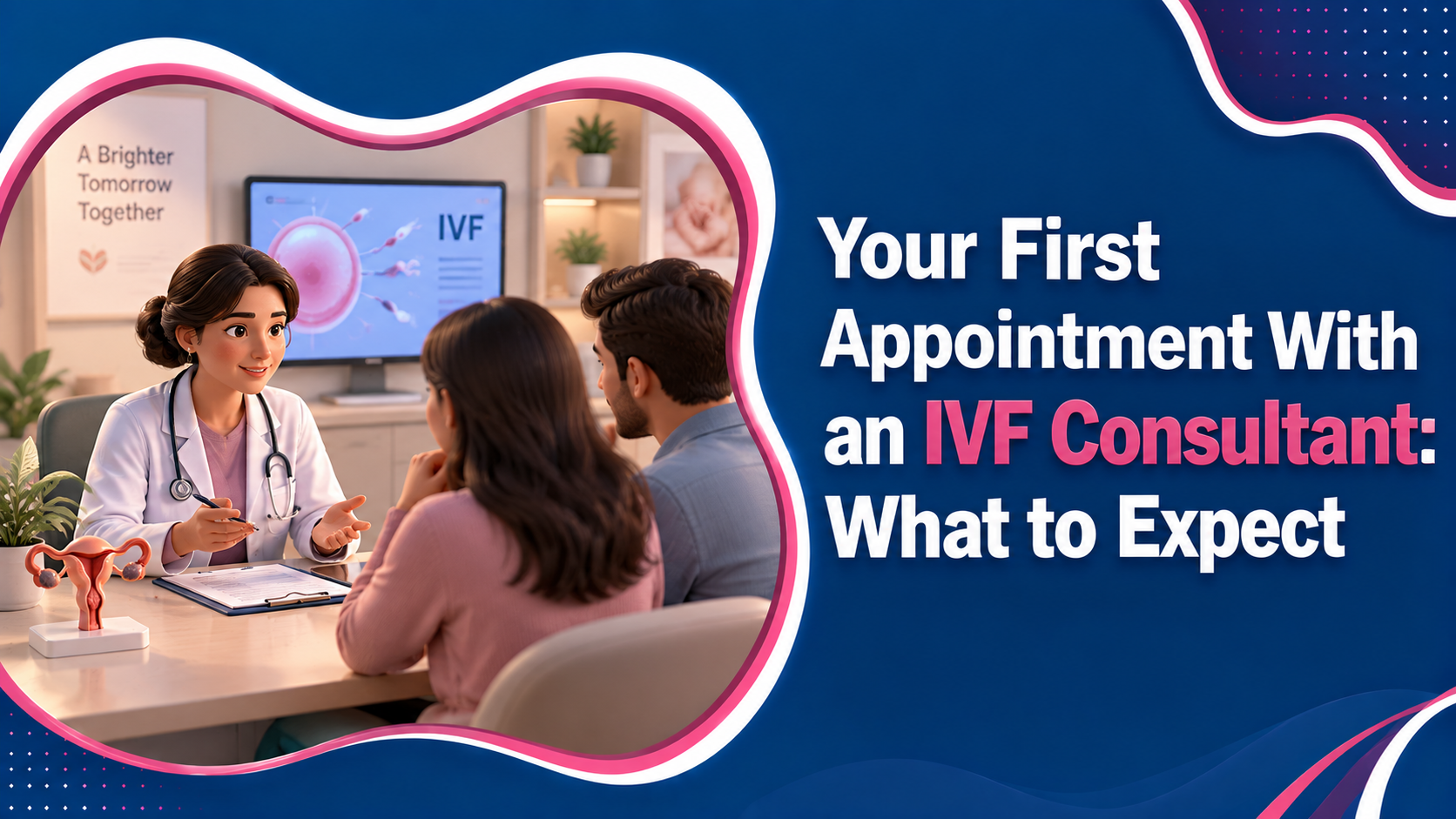
In this blog, we walk you through exactly what happens at your first appointment with an IVF consultant from what to bring, to what questions get asked, to what tests are ordered, to what you should leave with. If you are nervous about your first consultation, this guide will help you walk in prepared and walk out with real clarity.
Booking your first appointment with an IVF consultant is a big step. For most couples, it comes after months of trying, a lot of quiet worry, and a growing sense that it is time to ask for help. By the time you actually sit down in that consultation room, you might be feeling a mix of relief, nervousness, and uncertainty about what happens next.
This blog is here to remove that uncertainty. We will take you through the first appointment with an IVF consultant step by step so you know exactly what to expect, what to bring, and what questions to ask.
Blog Overview:
In this blog, we walk you through exactly what happens at your first appointment with an IVF consultant from what to bring, to what questions get asked, to what tests are ordered, to what you should leave with. If you are nervous about your first consultation, this guide will help you walk in prepared and walk out with real clarity.
Booking your first appointment with an IVF consultant is a big step. For most couples, it comes after months of trying, a lot of quiet worry, and a growing sense that it is time to ask for help. By the time you actually sit down in that consultation room, you might be feeling a mix of relief, nervousness, and uncertainty about what happens next.
This blog is here to remove that uncertainty. We will take you through the first appointment with an IVF consultant step by step so you know exactly what to expect, what to bring, and what questions to ask.
Before You Go — What to Prepare
A good first appointment with an IVF consultant starts before you even walk through the door. A first fertility consultation typically begins with preparation. Patients may be asked to gather relevant medical records, including prior test results, menstrual history, and any previous treatments. Here is what to gather before your appointment:- Previous blood test results: any hormone panels, thyroid tests, or general health checks
- Menstrual cycle history: how regular your cycles are, how long they last, any changes you have noticed
- Any previous pregnancy history: including miscarriages or ectopic pregnancies
- A list of current medications: including supplements
- Any previous fertility treatments: if you have tried IUI, ovulation induction, or a previous IVF cycle
Step 1 — Medical History Review
The first thing that typically happens at an initial IVF consultation is a medical intake, during which the healthcare provider collects information about the patient’s family history, menstrual cycle, any prior pregnancies, health conditions, and current medication use. Previous fertility treatments, surgeries, or bloodwork may also be discussed. Your consultant will ask about:- How long you have been trying to conceive
- Your menstrual cycle — regularity, length, any pain or unusual bleeding
- Previous pregnancies, losses, or complications
- Any diagnosed conditions — PMOS, endometriosis, thyroid issues, fibroids
- Lifestyle factors — smoking, alcohol, weight, stress levels
- Your partner’s health history and any known sperm concerns
- Family history of conditions that could affect fertility
Step 2 — Initial Tests and Investigations
After the medical history, your consultant will usually order a set of baseline investigations. Some of these may be done at the clinic on the same day. Others may be scheduled for a follow-up visit. A first consultation should include a review of your baseline fertility markers like hormone levels including FSH, LH, estradiol, and AMH, and ideally an antral follicle count via ultrasound. Here is what is typically included:| Test | What It Checks |
| AMH blood test | Ovarian reserve (how many eggs remain) |
| Day 3 FSH and LH | Ovarian function and pituitary hormone levels |
| Estradiol | Supports interpretation of FSH results |
| Thyroid function (TSH) | Thyroid disorders can silently affect fertility |
| Prolactin | Elevated levels can suppress ovulation |
| Transvaginal ultrasound | Uterus, ovaries, antral follicle count, any cysts or fibroids |
| Semen analysis (male partner) | Sperm count, motility, morphology |
Step 3 — Discussion of Diagnosis and Options
Once the history is reviewed and initial tests are either done or ordered, your IVF consultant will start explaining what the picture looks like and what your options are. Some patients may require ovulation induction, while other individuals can proceed directly to IVF. Specific add-on procedures, such as intracytoplasmic sperm injection (ICSI) or preimplantation genetic testing (PGT), may be recommended depending on the cause of infertility and patient preferences. Timelines, medication schedules, and potential risks are also reviewed at this appointment.Step 4 — Building Your Treatment Plan
By the end of the first appointment or sometimes after a second appointment once test results are back, your IVF consultant should be able to outline a personalised treatment plan. There will be a review of you and your partner’s medical history, including any previous fertility testing or treatments and what the outcomes were. This review is to help the care team personalize a treatment plan for you. This plan will typically include:- Which treatment is recommended: IUI, IVF, IVF with ICSI, donor eggs, or another option
- What medication protocol will be used and why
- An approximate timeline: how many weeks from start to transfer
- What the next appointment or investigation involves
- Who to contact if you have questions between appointments
Questions to Ask Your IVF Consultant at the First Appointment
Most people walk into their first fertility consultation with a mix of nerves, hope, and a mental list of questions they are afraid might sound naive. Then the appointment starts, the doctor uses three terms they have never heard before, and half of what they wanted to ask disappears somewhere between the waiting room and the exam table. Write these down before you go:- What do my test results tell you about my situation?
- What treatment do you recommend and why?
- Who do I contact if I have questions between appointments?
- What is my realistic chance of success, given my age and diagnosis?
- How many cycles might I need to plan for?
- What does the full cost look like including medications?
- What happens if the first cycle does not work?
- Does my partner need additional testing?
- What lifestyle changes would you recommend before we start?
What a Good IVF Consultant Appointment Feels Like
A first fertility consultation is genuinely valuable but only if you leave it with more clarity than you arrived with. A good appointment does not leave you more confused than when you arrived. It gives you a clear picture of where you stand, a specific next step, and the feeling that you were genuinely listened to and not rushed through. The IVF consultant you see should be able to explain your situation without drowning you in jargon. They should give you honest expectations, not just optimistic ones. And they should make you feel like your questions matter. At Risaa IVF, under the guidance of Dr. Rita Bakshi, one of India’s most experienced IVF specialists with over 35 years of dedicated practice, every first consultation is designed to be exactly that. An honest, thorough, unhurried conversation that ends with a plan.Final Thoughts
Your first appointment with an IVF consultant is not just a formality. It is the foundation of everything that follows. Coming in prepared with your records, your questions, and your partner makes a significant difference in how much you get out of it. Leave with a plan. Leave with clarity. And leave knowing that you have the right IVF consultant in your corner, someone who understands your situation, explains it clearly, and genuinely cares about getting you to the right outcome.Frequently asked questions (FAQs)
- Do both partners need to attend the first IVF consultant appointment?
- How long does the first IVF consultation typically take?
- Will I get a diagnosis at the first appointment?
- What if I feel rushed or unheard during the consultation?
- How soon can treatment begin after the first appointment?