
Quick Overview
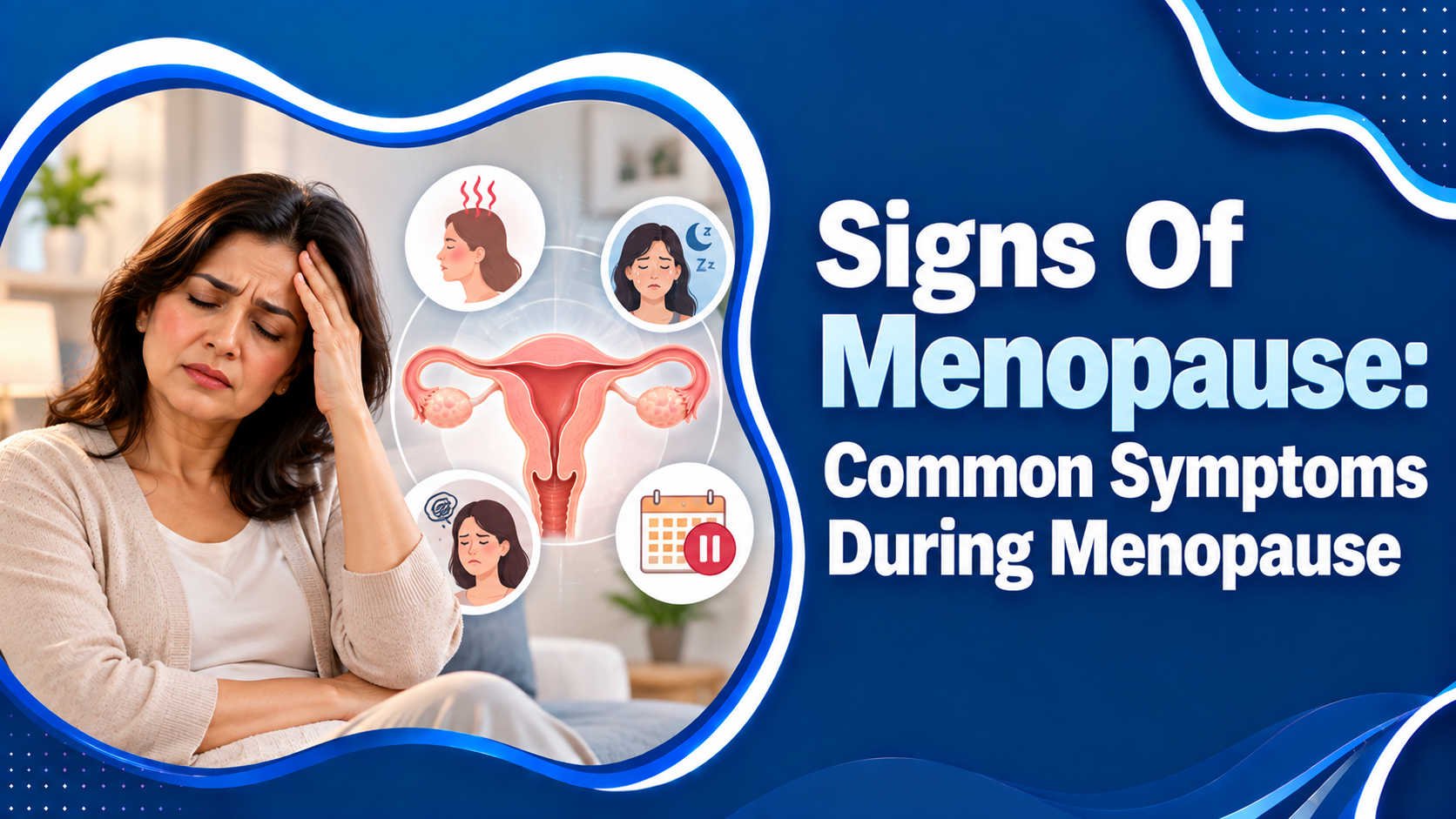
This blog explains the common signs of menopause. It discusses changes such as irregular periods, hot flashes, night sweats, sleep problems, mood changes, vaginal dryness, headaches, etc. It also explains when menopause symptoms may begin, how to manage it and when to consult a doctor.
Introduction
Menopause is a natural stage in every woman’s life. It marks the time when menstrual periods stop permanently and the ovaries gradually produce less estrogen and progesterone. Menopause does not happen suddenly for most women. The body goes through a transition called perimenopause before periods stop completely.
During this stage, women may notice several physical and emotional changes. Knowing the signs of menopause can help women understand what is happening in their bodies and when they could need medical advice. Symptoms can be different for every woman. Some may experience only mild changes, while others may have symptoms that affect their life.
What Is Menopause?
Menopause is diagnosed when a woman has not had a period for 12 consecutive months, without any other medical cause for the absence of periods. It usually occurs between the ages of 45 and 55.
Women generally experience perimenopause before menopause. During this period, hormone levels start to change and the menstrual cycle might become less regular. Symptoms can begin during this time and may continue into menopause.
Menopause is a biological process and is not a disease. However, some symptoms could be uncomfortable and could require treatment or support.
Common Signs Of Menopause
The signs of menopause are not the same for everyone. Some may experience various symptoms while others might notice only a few. Some of the symptoms are:
Irregular periods
Changes in periods are one of the first signs of menopause. Periods may come earlier or later than usual in perimenopause. You may also notice changes in the flow.
You can sometimes skip a period and have it again the next month. These changes happen as hormone levels become less predictable as the ovaries gradually reduce their activity.
Hot Flashes
Hot flashes are well known signs of menopause. They may cause a sudden feeling of warmth, generally around the face, neck and body.
A hot flash may last for a few minutes and can occur during the day or night. Some may also experience sweating, faster heartbeat or chills after hot flashes.
Sleep problems
Some women may find it difficult to fall asleep, while others wake up during sleep frequently.
Night sweats, hot flashes, hormonal changes and stress can affect sleep. Poor sleep can also make other symptoms, such as mood changes and tiredness, feel worse.
Night Sweats
Night sweats are hot flashes that happen while sleeping. It may cause excessive sweating and can make you wake during the night.
Regular night sweats can make it difficult to get good quality sleep. It can lead to tiredness, low energy or difficulty concentrating.
Vaginal Dryness
A decrease in estrogen may lead to vaginal dryness to become thinner and drier. This can lead to dryness, itching, irritation or discomfort.
It can sometimes cause pain during sex. You do not have to simply live with this symptom. Consulting a doctor can suggest suitable treatment options.
Lower Sexual Desire
After or during menopause, some women notice changes in their sexual desire. Changes in hormone levels, stress, vaginal dryness, emotions could also be a cause for it.
Also to note that not every woman experiences lower sexual drive, there is no single normal level of sexual desire.
Dry Skin And Hair Changes
Changes in estrogen levels can affect skin hair. Some may notice that their skin becomes drier or that their hair becomes thinner.
Simple habits such as drinking enough water, eating a balanced diet, and using gentle skin products can support overall health.
When Do Signs Of Menopause Begin?
The signs of menopause may begin several years before periods stop completely. This stage is known as perimenopause.
Symptoms may come and go and may change over time. In one month, a woman may experience hot flashes, while in another month she might notice changes in her periods or sleeping problems.
How Can Menopause Symptoms Be Managed?
Many signs of menopause could be managed by healthy lifestyle habits and treatment, if required.
Exercise, eating a balanced diet, proper sleep, stress management and quitting smoking can support overall health.
If symptoms are affecting your daily life, a doctor can discuss suitable treatment options. Depending on your symptoms and health history, treatment may include hormone therapy or non-hormonal options.
When To Consult A Doctor?
Most of the signs of menopause are a normal part of transition. But you should consult a doctor if you experience:
- Heavy or unusual bleeding
- Bleeding after menopause
- Severe pain
- Frequent mood changes
A doctor will assess you and suggest suitable treatment, if required.
Conclusion
Menopause is a natural stage of life, but the changes related to it could be difficult sometimes to manage. Common signs include irregular periods, sleep problems, hot flashes, vaginal dryness, headaches and more.
Understanding these symptoms can help women remain prepared during this phase. If symptoms become uncomfortable or unusual bleeding occurs, consulting a doctor could be helpful for you and suggest suitable treatment, if required.
Myth Vs Facts
Myth: Every woman experiences the same symptoms.
Fact: Symptoms can vary from one woman to another.
Myth: Menopause always occurs at 50.
Fact: Menopause usually occurs between the age of 45 and 55.
Myth: Hot flashes happen to every woman.
Fact: Hot flashes are common but not every woman experiences it.
Myth: Bleeding after menopause is normal.
Fact: Bleeding after menopause should be discussed with a healthcare professional.
Frequently Asked Questions(FAQs)
- At what age does menopause generally begin?
Menopause usually occurs between the age of 45 and 55, though it can happen earlier or later.
- Can menopause cause irregular periods?
Yes, irregular periods are early signs during menopause.
- Can menopause affect sexual health?
Yes, hormonal changes can cause vaginal dryness, discomfort, or changes in sexual desire.
- Can menopause symptoms be treated?
Yes, lifestyle changes, hormone therapy, and non-hormonal treatments may help manage symptoms depending on individual needs.
- When should I see a doctor for menopause symptoms?
You should consult a doctor if symptoms are severe, affect your daily life, or you experience unusual or heavy bleeding.