
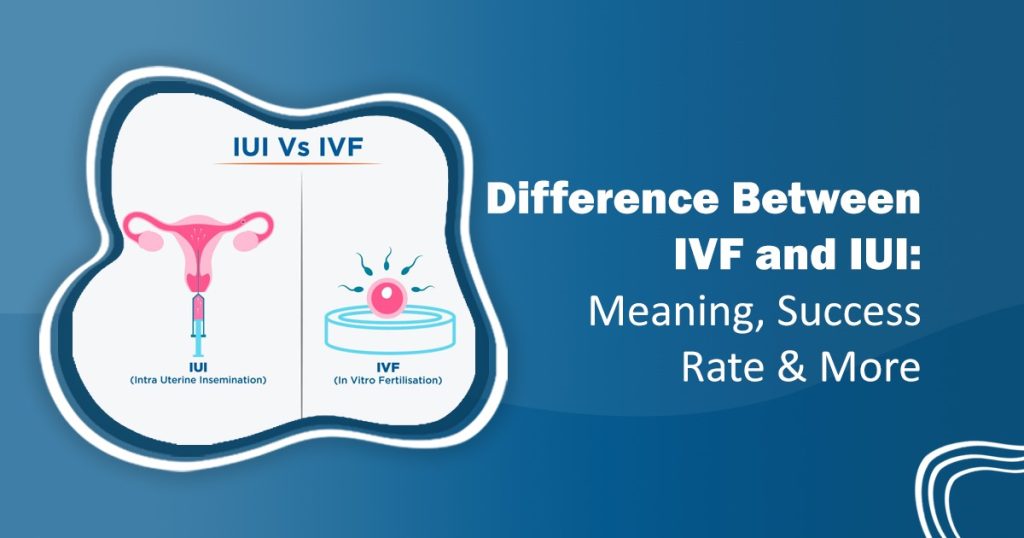
The difference between IVF and IUI is something that many couples want to understand when they want to start their fertility journey. Both these treatments are popular and often recommended to couples. However, they work in different ways and are used for different reasons. So, it’s important to know the difference to make the right decision based on your health, age, and fertility needs. In this blog, we’ll explain both IVF and IUI in simple words so it’s easy to understand everything.
At RISAA IVF, Dr. Rita Bakshi, Senior IVF Specialist and Gynaecologist with over 35 years of experience, has guided many couples to choose the right fertility treatment. Whether it’s IUI or IVF, her team ensures you get honest advice and the right care. In this blog, we will cover everything about IVF and IUI. We will include how they work, when they are used, and more.
What is IVF ?
IVF full form is In Vitro Fertilization. It is a fertility treatment that helps people to become parents when natural pregnancy is not possible. In IVF, the woman’s eggs are collected from her ovaries and fertilized with the man’s sperm in a lab. Once the egg and sperm meet and form an embryo then the embryo is placed back into the woman’s uterus and IVF pregnancy starts.
This process is done step by step under the care of fertility doctors. IVF is helpful for couples who have problems like blocked fallopian tubes, low sperm count, age-related infertility, PCOS, or unexplained infertility issues.
What is IUI ?
IUI full form is Intrauterine Insemination and it is a simple fertility treatment that helps increase the chances of pregnancy. In this process, the doctor places healthy, prepared sperm directly into the woman’s uterus when she is most fertile. This helps the sperm to get closer to the egg.
IUI is often used for couples who have mild fertility problems like low sperm count, irregular ovulation, or unexplained infertility. It is a less expensive and less invasive option in comparison to IVF. There are many couples who try IUI before moving on to other advanced treatments.
What is the Difference Between IVF and IUI?
Comparison Table
| Point | IUI (Intrauterine Insemination) | IVF (In Vitro Fertilization) |
|---|---|---|
| Fertilization Process | Fertilization happens inside the woman’s body | Fertilization happens in a laboratory outside the body |
| Procedure Complexity | Simple and minimally invasive | More advanced and complex procedure |
| Lab Involvement | Minimal laboratory work | Eggs and sperm are handled in a lab |
| Cost | More affordable treatment option | Higher treatment cost |
| Success Rate | Lower success rate compared to IVF | Higher success rate |
| Best Recommended For | Mild infertility issues | Severe or long-term infertility cases |
| Time Required | Usually quicker treatment cycle | Longer treatment process |
When Do Doctors Recommend IVF?
Doctors may recommend IVF in the following situations:
- Women with blocked or damaged fallopian tubes
- Men with very low sperm count or poor sperm motility
- Endometriosis affecting the ovaries or uterus
- Women above the age of 35 with reduced fertility
- Unexplained infertility where no clear cause is found
- Couples who have experienced multiple failed IUI cycles
- Severe male infertility issues
- Problems related to egg quality or ovulation
Compared to IUI, IVF generally offers higher success rates, especially in cases of severe infertility.
When Do Doctors Recommend IUI?
Doctors may recommend IUI in the following cases:
- Mild male infertility, such as low sperm count or weak sperm movement
- Irregular ovulation or ovulation disorders
- Unexplained infertility with no clear medical cause
- Mild endometriosis
- Cervical issues that make it difficult for sperm to reach the egg
- Couples trying to conceive for less than two years
- When donor sperm is being used
- Couples looking for a less invasive fertility treatment before IVF
IUI is often recommended before IVF because it is less expensive and involves a simpler treatment process.
IUI vs IVF Success Rate
The difference between IVF and IUI becomes clear when we talk about their success rates. Both these treatments help couples to get pregnant but they work in different ways and give different results.
IUI (Intrauterine Insemination) has a lower success rate. On average, about 10 to 15 women out of 100 may get pregnant in one IUI cycle. It works better for younger women and couples who have only mild fertility problems.
On the other hand, IVF (In Vitro Fertilization) has a higher success rate. Around 40 to 50 women out of 100 may get pregnant in one IVF cycle, especially if the woman is younger and healthy.
In simple words, IUI is often used as the first treatment because it’s easier and less costly. However, if IUI doesn’t work after a few tries or if the fertility problem is more serious then IVF is usually the better option with a higher chance of success.
IUI vs IVF Price
The difference between IVF and IUI is also seen in their cost. IUI is a simpler treatment, so it costs much less than IVF. It is often used as the first step because it is more affordable and easy to do.
IVF is more expensive because it includes more steps like taking out eggs, fertilizing them in a lab, and then putting the embryo back into the uterus. These steps need more care, time, and lab work and this increases the cost.
In simple words, IUI cost is cheaper but may need to be repeated a few times. IVF costs more but gives higher chances of pregnancy in each cycle. Your doctor will help you to choose the best option depending on your condition, age, and how soon you want to try for a baby.
Risks and Side Effects ?
Final Words
It’s important to understand the difference between IVF and IUI, especially if you are trying to conceive and exploring treatment options. In this blog, we’ve explained what IVF and IUI mean, when they are recommended, their success rates, costs, and how they work. So, it’s important to know about these details to help you make better decisions about your fertility journey.
At RISAA IVF, Dr. Rita Bakshi (Senior Infertility Specialist and Gynaecologist) has helped many couples to find the right fertility treatment. If you have questions about your condition or want expert guidance on where to begin, we are here to help. Call us at 95555 44421/22/23 or email at doctor@risaaivf.com for personalised advice.
Frequently asked questions (FAQs)
IUI or IVF for endometriosis?
It depends on how severe the endometriosis is. For mild cases, IUI may work. But for moderate to severe cases, IVF is usually more effective.
Chance of twins IUI vs IVF?
Both IUI and IVF can lead to twins, but the chances are slightly higher with IVF, especially when more than one embryo is transferred.
Which is more painful IUI or IVF?
IUI is usually less painful and feels like a normal check-up. IVF involves more steps, injections, and minor procedures, so it may be a bit more uncomfortable.
Does IVF guarantee pregnancy after failed IUI attempts?
No, IVF does not guarantee pregnancy, but it gives a higher chance than IUI. Many couples who don’t conceive with IUI are able to get pregnant through IVF, especially if the fertility issue is more serious.
Is bed rest needed after IUI or IVF?
No, full bed rest is not needed after IUI or IVF. You can rest for a short time after the procedure, but you can return to normal daily activities the same day unless your doctor advises otherwise.