
Quick Overview
If your doctor has ever mentioned that you have an anteverted uterus, it’s completely natural to wonder what that means. This blog explains anteverted uterus meaning in simple, reassuring language, covering what it actually is, whether it affects fertility or pregnancy, and how it compares to other uterine positions. The short answer upfront: it’s the most common uterine position, and it’s not something to worry about.
What Does Anteverted Uterus Actually Mean?
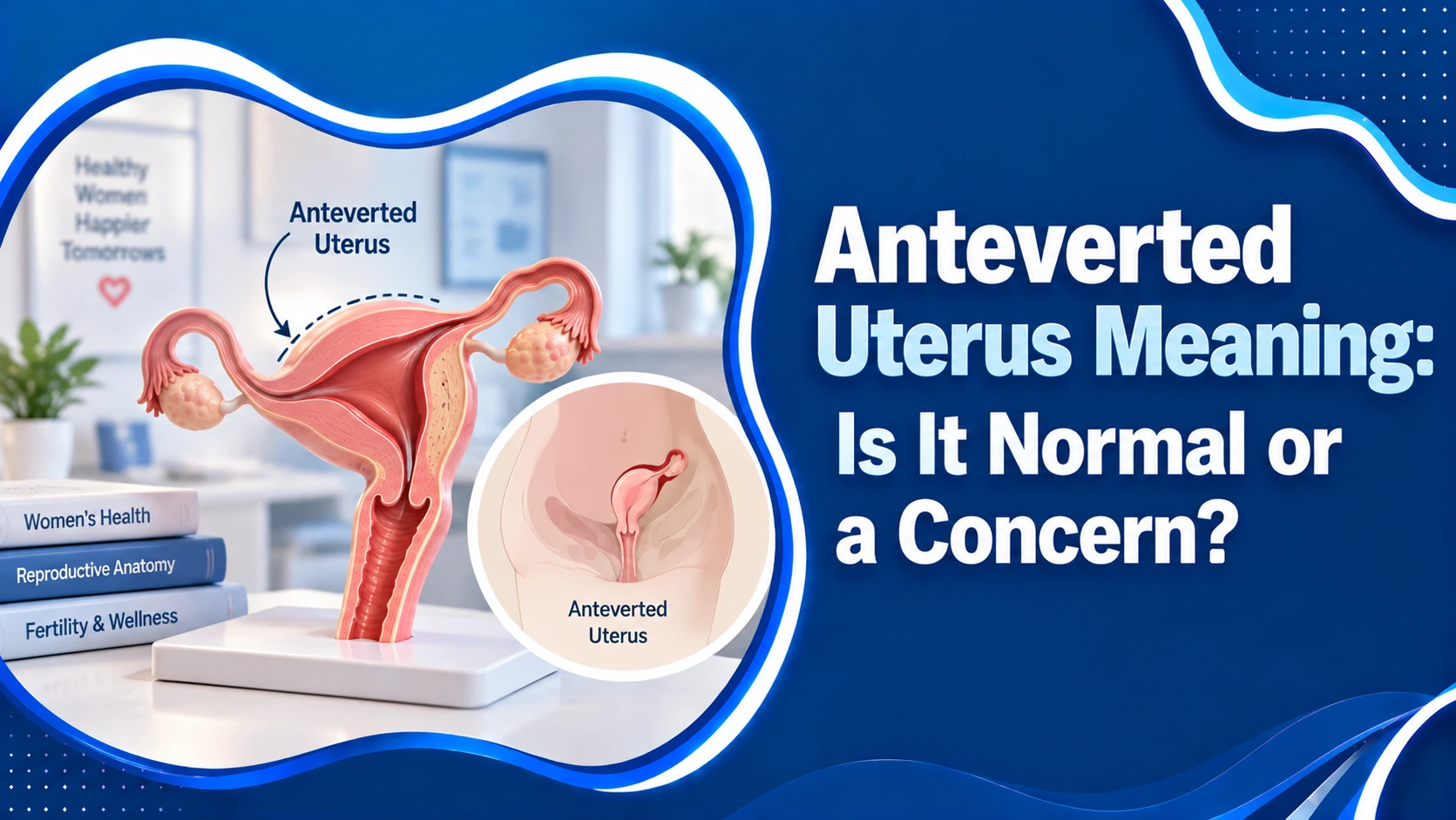
Let’s start with the basics. An anteverted uterus meaning is that your uterus tilts slightly forward, toward your bladder, instead of sitting straight up or tilting backward. This isn’t a medical condition or an abnormality, it’s just one of the natural ways a uterus can be positioned within the pelvis.
In fact, an anteverted uterus is the most common uterine position overall, found in roughly 70 to 75 percent of women. Most women are simply born this way, though the position can occasionally shift later due to pregnancy or other factors.
Anteverted Uterus vs Other Uterine Positions
To understand this better, it helps to know the other positions a uterus can naturally sit in:
- Anteverted uterus: Tilts forward, toward the bladder. This is the most common position.
- Retroverted uterus: Tilts backward, toward the spine. Still a normal variation, just less common.
- Midline (axial) uterus: Sits straight, without tilting significantly in either direction.
None of these positions are considered “better” or “worse” medically. They’re simply natural variations, much like being right-handed or left-handed.
Anteverted Uterus Meaning: A Quick Comparison Table
| Aspect | Anteverted Uterus | Retroverted Uterus |
| Direction of tilt | Forward, toward the bladder | Backward, toward the spine |
| How common | Most common, about 70-75% of women | Less common, but still normal |
| Symptoms | Usually none | Usually none, though some may feel discomfort |
| Effect on fertility | No effect | No effect |
| Effect on pregnancy | No effect | Usually shifts to anteverted position during pregnancy |
Does an Anteverted Uterus Cause Any Symptoms?
For most women, an anteverted uterus doesn’t cause any noticeable symptoms at all. Many women only find out they have one during a routine pelvic exam or ultrasound, done for an entirely unrelated reason.
In rare cases, if the forward tilt is unusually pronounced, some women may notice mild pressure in the lower abdomen or slight discomfort during certain activities. However, this is uncommon, and even then, it’s usually manageable and not linked to any serious health concern.
Does an Anteverted Uterus Affect Fertility?
This is probably the most common worry, so let’s address it clearly: no, an anteverted uterus does not affect fertility. It doesn’t interfere with ovulation, sperm movement, or your ability to conceive naturally.
If a woman with an anteverted uterus is experiencing difficulty conceiving, doctors are clear that the uterine position itself isn’t the likely cause. In such cases, it’s worth looking into other possible factors, since something else is usually responsible for the fertility challenge, not the direction the uterus tilts.
Does It Affect Pregnancy or Delivery?
Here’s more reassuring news. Having an anteverted uterus doesn’t increase any risks during pregnancy, labor, or delivery. Your uterus is just as capable of growing and supporting your baby’s development in this position as in any other. It doesn’t affect whether you can have a vaginal delivery, and it isn’t a factor doctors consider when deciding between vaginal delivery and a C-section.
Common Things People Wonder About
- Does it affect how soon you “show” during pregnancy? Uterine position may play a small role among many factors, but it isn’t the main reason some women show earlier than others.
- Can the uterus change position later in life? Yes, in some cases, pregnancy, surgery, or conditions like endometriosis can cause a shift in uterine position, though this isn’t harmful on its own.
- Does it need any specific treatment? No, since it’s a normal anatomical variation, there’s nothing to treat or correct.
Important Note
Please don’t assume that the anteverted uterus meaning is the cause of any symptoms, fertility difficulty, or discomfort you may be experiencing, since current medical understanding is clear that this position doesn’t cause such issues on its own. If you’re facing period pain, discomfort during intercourse, or difficulty conceiving, please consult a qualified gynaecologist or fertility specialist, so the actual underlying cause can be properly identified rather than assumed.
Bringing It All Together
An anteverted uterus meaning is simply a description of how your uterus naturally sits within your pelvis, not a medical condition or a concern. It’s the most common uterine position, doesn’t affect fertility, and doesn’t pose any risk during pregnancy or delivery. If your doctor has mentioned this term during a checkup, there’s genuinely no reason to worry, it’s just one of the many normal variations in how bodies are built.
Frequently Asked Questions (FAQs)
- Is having an anteverted uterus normal?
Yes, it’s completely normal and is actually the most common uterine position, found in about 70 to 75 percent of women.
- Does an anteverted uterus affect fertility?
No, it doesn’t affect fertility. Doctors are clear that this position doesn’t interfere with conception.
- Can an anteverted uterus cause pain?
Usually not. In rare cases with an unusually pronounced forward tilt, some mild discomfort may occur, but this is uncommon.
- Does an anteverted uterus affect pregnancy or delivery?
No, it doesn’t increase any risks during pregnancy, labor, or delivery, and doesn’t affect the mode of delivery.
- How is an anteverted uterus diagnosed?
It’s usually noticed during a routine pelvic exam or ultrasound, often for reasons unrelated to the uterine position itself.
- Does an anteverted uterus need any treatment?
No, since it’s a normal anatomical variation, no treatment or correction is needed.
- Can uterine position change over time?
Yes, pregnancy, surgery, or certain conditions can sometimes cause a shift in position, though this generally isn’t harmful.
- Does an anteverted uterus cause irregular periods?
No, uterine position isn’t linked to irregular periods. Other underlying factors are usually responsible if this occurs.
This article is for general informational purposes only and is not a substitute for professional medical advice. Please consult a qualified gynaecologist or fertility specialist for guidance tailored to your individual situation.