
Quick Overview
This blog includes information about first week pregnancy symptoms, common symptoms that may be confused with pregnancy, when pregnancy symptoms may begin and the right time to take a pregnancy test.
Introduction
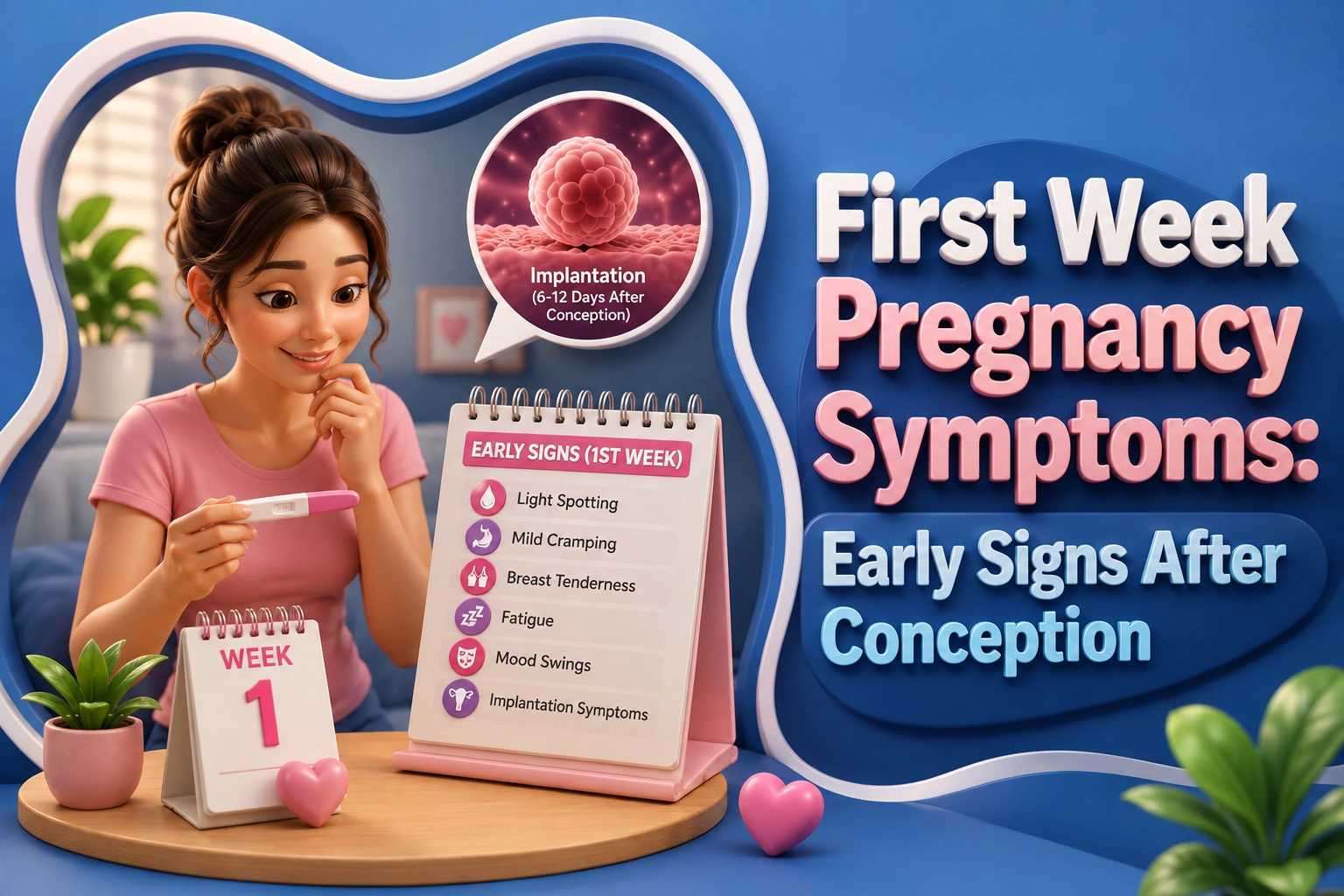
The first week pregnancy symptoms may be confusing because pregnancy is usually counted from the first day of the last menstrual period. This means that during what is called “week 1,” conception has generally not happened yet. Ovulation and fertilization usually occur around the second or third week, depending on the menstrual cycle.
Due to this, most of the people don’t experience first week pregnancy symptoms, However, some may notice changes related to their menstrual cycle, ovulation or hormonal changes later in the cycle. Understanding the timing can help avoid unnecessary worries and confusion.
What Happens During The First Week Of Pregnancy?
Pregnancy is commonly calculated approx 40 weeks from the first day of the last menstrual period. Therefore, the first week begins when the menstrual period begins.
During this period, the body prepares for ovulation. The uterine lining may shed during the period and hormonal changes begin preparing the ovaries and uterus for the next cycle.
Actual pregnancy begins after an egg is fertilized by the sperm and the fertilized egg later implants into the uterus.
Implantation generally occurs several days after fertilization, so symptoms instantly after sex are not usually caused by pregnancy.
Can You Have Pregnancy Symptoms In The First Week?
Usually no. As it is too early for pregnancy hormones to cause noticeable symptoms in the first week.
The pregnancy hormone hCG begins increasing after implantation. Since implantation happens after fertilization, pregnancy symptoms generally do not appear immediately after conception.
Some symptoms people associate with early pregnancy may usually caused by:
- Ovulation
- The menstrual period
- Hormonal changes’
- Stress
- Improper sleep
- Change in diet
So, experiencing these changes does not mean that you are pregnant.
Signs That Might Be Mistaken As First Week Pregnancy Symptoms
Mild Abdominal Cramps
Some people experience mild cramps around the time of their ovulation or menstrual period. These cramps can sometimes be mistaken as early pregnancy signs.
However, cramping during the first week is most likely to be related with menstrual period or hormonal changes as conception might not have occurred yet.
Severe abdominal pain should not be assumed to be a normal cycle symptom then consult a doctor.
Breast Tenderness
Hormonal changes during the menstrual period could cause the breast to feel swollen, heavy and sensitive.
Though breast tenderness is common during early pregnancy, experiencing during the first week does not confirm pregnancy.
Fatigue
Fatigue is related to pregnancy, but experiencing during the first week does not confirm pregnancy.
Factors such as lack of sleep, stress, work, dehydration around your menstrual can also make you feel tired.
Pregnancy related fatigue increases more likely later, when pregnancy hormones increase.
Mood Changes
Change in hormone levels can also affect one’s mood. You may feel anxious, irritated, over-whelmed, etc.
However, mood changes during the first week are not a specific pregnancy symptom. PMS and everyday stress can produce similar emotional changes.
Increased Vaginal Discharge
Vaginal discharge changes throughout the menstrual cycle. Around ovulation, some people may notice discharge becoming clearer, wetter and more slippery.
After ovulation, discharge may become thicker or change in amount.
These changes are normal and do not indicate pregnancy.
Headache
Hormonal changes during the menstrual cycle can also contribute to headaches. Along with this, stress, improper sleep and skipping meals can also lead to headaches.
Although headaches can occur during pregnancy, a headache during the first week is not a reliable indication of pregnancy.
When Do Pregnancy Symptoms Usually Start?
Pregnancy symptoms usually become noticeable after implantation, when pregnancy hormone level begins to rise.
Some people may notice changes around the time of their period, while others may not see any changes for several weeks.
Common pregnancy symptoms might include:
- A missed period
- Fatigue
- Breast tenderness
- Increased urination
- Nausea
- Increased sensitivity to smell
- Bloating
However, symptoms vary from person to person. Some may experience several symptoms while others may experience a few.
Is a Pregnancy Test Accurate In The First Week?
Taking a pregnancy test during the first week is generally too early to give reliable results, especially when the ovulation and fertilization has not occurred.
Home pregnancy tests detect hCG in urine. The hormone rises after implantation, so testing it too early could give false negative pregnancy results.
For accurate results, try testing it around the time of your due period or missed period. If the test is negative but your period does not arrive, consider testing again after a few days or speaking with a healthcare professional.
First Week Pregnancy Symptoms Vs PMS
First week pregnancy symptoms and PMS may have similar symptoms like breast tenderness, fatigue, mood changes, etc. So, only several symptoms cannot confirm pregnancy.
| Symptoms | Early pregnancy | PMS |
| Breast tenderness | Common | Common |
| Fatigue | Common | Possible |
| Bloating | Possible | Common |
| Missed period | Common | No |
| Mood changes | Possible | Common |
| Nausea | More common later | Less common |
| Mild cramps | Possible | Common |
A pregnancy test is a better option to determine pregnancy rather than to only rely on symptoms.
When To Consult A Doctor?
Most mild symptoms around the time of your menstrual cycle are not a cause for concern. However, seek medical advice if you experience severe abdominal pain, headache, fainting, heavy bleeding, etc.
If you have been trying to conceive without success for an extended period, consulting a doctor could be a better option who can provide you with better suggestions or medications, if required.
Conclusion
The first week pregnancy symptoms are usually too early for true pregnancy symptoms as pregnancy has not occurred according to the standard method of counting.
Symptoms such as breast tenderness, fatigue, cramps, bloating, etc are often related to ovulation, hormonal changes, menstruation.
Pregnancy symptoms usually occur after implantation, so first week pregnancy symptoms could not be assumed as pregnancy. If you think you may be pregnant, then wait for the appropriate time to take the test to get accurate results.
Understanding the time of ovulation, fertilization, implantation and hormone change can make it less confusing.
Frequently Asked Questions(FAQs)
- Can first week pregnancy symptoms confirm pregnancy?
No, first week pregnancy symptoms do not confirm pregnancy. As these symptoms can occur due to several factors like hormonal changes, ovulation, etc.
- What is the earliest sign of pregnancy?
A missed period is the most common sign of pregnancy. But it does not confirm it as a period can be missed due to stress, hormonal changes, lifestyle changes, improper sleep, etc.
- Can I take a pregnancy test in the first week?
Testing during the first week is too early. Testing it around the time your p7eriod is due or after a missed period.
- Are cramps during the first week normal?
Mild cramps can occur because of menstruation, ovulation, or normal hormonal changes. Severe or persistent pain should be evaluated by a healthcare professional.