
Quick Overview
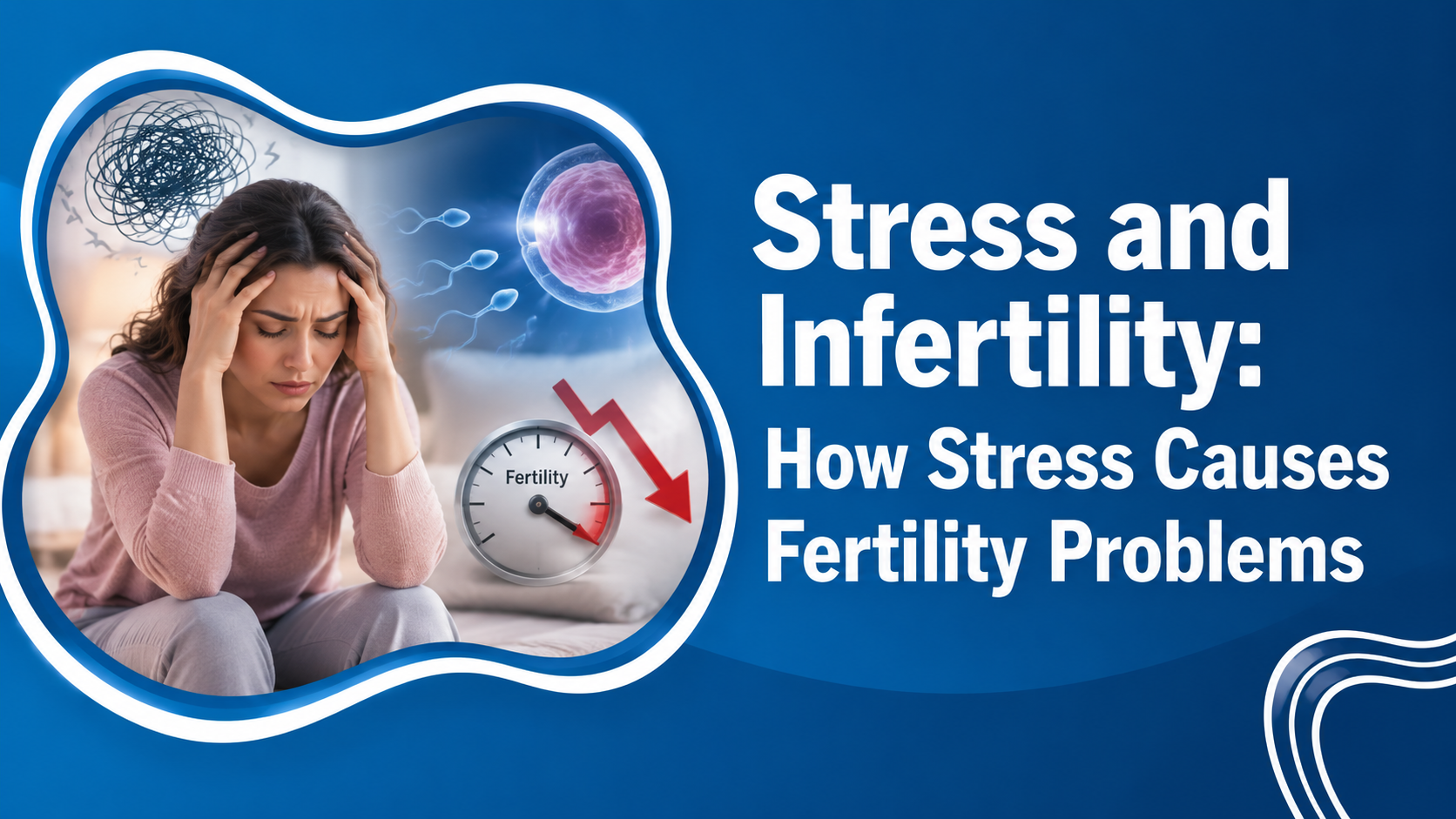
This blog includes information on how stress and infertility affects hormones, ovulation, sperm health, sexual activity, etc. It also covers stress relieving techniques, emotional impact on infertility and when to consult a doctor.
Introduction
Trying to conceive could be an emotional journey, especially when you are trying to conceive but you don’t succeed. It can affect you mentally if pregnancy doesn’t happen as expected.
At the same time, stress, finances, relationship problems, health concerns, etc itself can affect overall well-being.
The relationship between stress and infertility is complex. Having stress does not mean that it will make a person infertile or infertility is caused by too much stress.
But we cannot deny the fact that stress can affect reproductive health indirectly and in some cases it may also influence sperm health, ovulation, hormones, sexual health and more.
What Is Stress?
Stress is basically the body’s response to emotional or physical pressure. Short-term stress may help the body to respond to several challenging situations. And it can affect health, sleep cycle, appetite, mood and overall health.
People may experience additional stress if they are facing fertility issues. Repeated pregnancy tests, fear of disappointing their partner, financial problems and more may contribute to the cause.
The fertility journey could be more difficult if the infertility difficulties increase stress. Stress and fertility are linked to each other, which affects one’s sexual life.
Can Stress Cause Infertility?
We cannot say that stress causes infertility directly. But there are several factors that can influence infertility. Many people experience stress but still conceive naturally, while some may have low stress but can’t conceive due to some fertility issues.
Infertility can have several causes such as ovulation, fallopian tube blockage, hormonal changes, medical conditions, etc. Stress can influence these causes and can affect one’s reproductive health.
So, stress should be seen as a possible factor for infertility.
How Can Stress Affect Female Infertility?
Excessive stress can influence the brain areas responsible for regulating reproductive hormones. It affects hypothalamus, which communicates with the pituitary gland and ovaries to help regulate the menstrual cycle.
Some people may face changes due to excessive stress. Those are:
- Hormonal changes
- Ovulation problems
- Sudden change in sexual desire
- Sleep cycle
- Eating habits
- Menstrual cycle timing
Ovulation plays a major role in conception, if it keeps changing frequently, conceiving becomes slightly difficult.
How Can Stress Affect Male Infertility?
Stress does not only affect female infertility, it also affects males also. A long-term stress could bring multiple changes in one’s body which can affect their reproductive health and semen parameters.
Stress can indirectly affect infertility by contributing to:
- Sleep problems
- Erectile difficulties
- Reduced sexual desires
- Less physical activities
- Eating habits
These are some major factors that affect sperm health and sexual health, making it difficult for conceiving. Sperm production takes time and change in lifestyle can take several weeks to reflect in semen parameters.
Stress and infertility causes numerous thoughts in one’s mind that affects a person’s personality also.
Stress And Fertility: An Emotional Cycle
Stress could be a major source of infertility. Several thoughts, change in lifestyle, daily challenges and even more leads a person to overthinking and eventually leads to stress.
A person begins with the expectation that conception will happen naturally. But when it doesn’t, it creates a doubt in one’s head as to why they are facing pregnancy issues. Is there any problem in them, am I not good enough and more confusions like this. Fertility testing or treatment may add further additional pressure.
For some people, it may create a cycle like:
Difficulty conceiving ➔ Increased stress ➔ Physical or emotional strain ➔ Reduced sexual activities or lifestyle changes ➔ Additional stress.
And this cycle keeps on moving.
Breaking this cycle does not mean that you will conceive instantly, instead it will make the journey healthier and enhance the chances of pregnancy.
Can Stress Affect IVF Success?
Fertility treatments could be stressful. People undergoing IVF may experience anxiety about injections, several tests, procedures, treatment costs, etc, as everything is new for them. They don’t have any idea what follows after every procedure.
There are no such claims or findings that say IVF has failed due to excessive stress. It is important because people should not blame themselves for a failed IVF as they were stressed or anxious.
Managing stress during IVF is valuable as it can improve emotional well-being, sleep cycle and overall quality of life.
Signs That May Affect Your Well-Being
Stress can affect every individual differently. Some of the signs are:
- Constant overthinking
- Facing difficulty in sleeping
- Low energy levels
- Difficulty in concentration
- Reduced sexual desire
- Reduced interest in physical activities
- Change in appetite
How To Manage Stress While Conceiving
Stress management does not mean that you will eliminate everything from your life which causes stress to you. Instead, our goal should be to cope with stress.
Here are some ways on how you can manage stress:
- Regular exercise: Do moderate physical activity everyday. It will help you both physically and emotionally. Walking, yoga and other minor activities are best for it.
Avoid excessive exercise if it is affecting your menstrual health or overall health.
- Get proper sleep: Give priority to your sleep. Sleep at least for 7-9 hours which will keep your mood set. Poor sleep can make stress feel more difficult to manage.
- Maintain a balanced diet: A healthy diet provides nutrients required for the body. Include vegetables, fruits, whole grain foods, protein source foods, etc.
- Talk to your partner: Talk about the problem with your partner freely. Discuss about the problem you are facing as he/she is the only one who will not judge and instead, they will help you out.
It is important to maintain intimacy without making every sexual interaction focused on conception.
- Limit unhelpful information: Stop searching for infertility symptoms, erectile dysfunctions and other causes that may lead to infertility. This kind of information will only increase the tension and will stress you.
Instead consult a doctor for reliable information.
When To Consult A Doctor
First of all, you should not assume that stress is the reason, if you are not able to conceive. But if it is being repeated again and again, seeking medical advice would be the best option. Doctors will conduct several tests to check whether any of the partners is facing issues or not, depending on age, medical conditions.
Early evaluation could help in finding the cause and determine whether fertility treatment would be appropriate.
Conclusion
The most useful way to think about stress and infertility is that stress is one of the major factors that determines fertility. Stress may affect hormonal function, sexual health, ovulation, sperm health, and some aspects of reproductive health.
Stress and infertility are linked to each other, stress could be a contributing factor to infertility. It is necessary to manage stress and try to cope with it. Reducing stress does not guarantee pregnancy, but it helps one’s personal and professional life both.
Speak to your doctor about the problems you are facing and should not hesitate to ask them.
Frequently Asked Questions(FAQs)
- Can stress cause infertility?
Stress alone does not cause infertility, but it can be a major reason for it and affect your reproductive health.
2. Does reducing stress increase the chances of pregnancy?
No, reducing stress does not increase the chances of pregnancy. But it helps in improving your reproductive health.
3. How are stress and infertility linked?
Stress and infertility are linked as excessive stress may lead to a cause of infertility. It is recommended to manage stress, which helps in improving one’s overall health.
4. How to manage stress while trying to conceive?
Taking proper sleep, exercising regularly, maintaining a healthy diet, meditation, etc are some ways to manage stress.
5. When to consult a doctor?
If you are trying to conceive without success and it is happening again and again, you should consult a doctor for further information and treatments, if required.