
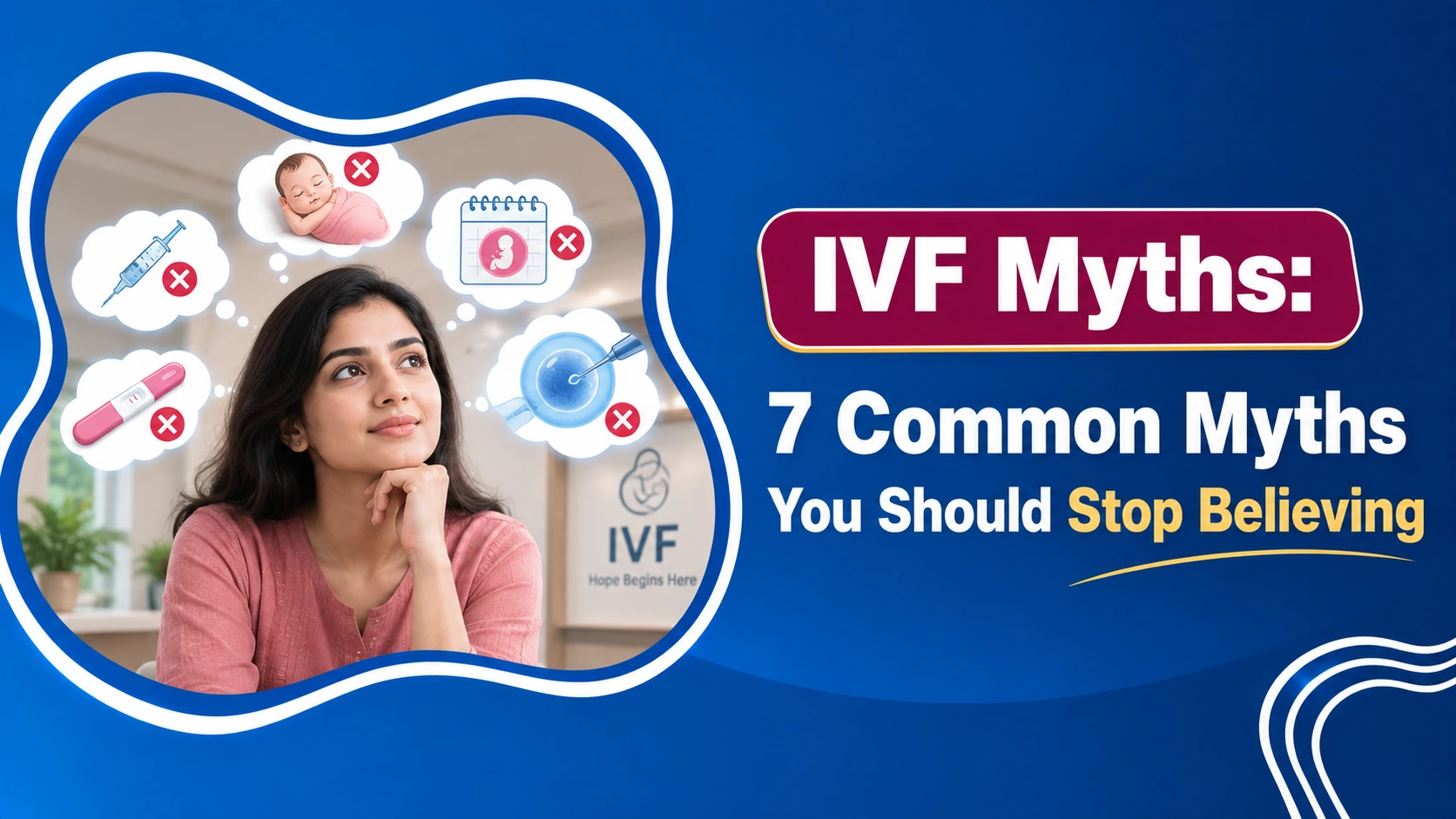
Almost everyone knows someone who has an opinion about IVF, even if they have never been through it themselves. Some opinions come from outdated stories, some from social media, and some are simply passed down without anyone checking if they are true. This is where IVF Myths quietly do the most damage. They do not just confuse people. They stop couples and individuals from even reaching out for help.
This blog looks at a fresh set of misconceptions that shape how people see IVF as a whole, not just one part of the journey. Let’s clear them up, one at a time.
Common IVF Myths You Should Stop Believing
If you’ve been searching for information about IVF, you’ve probably come across many opinions, stories, and advice, some helpful and some completely misleading. These IVF myths can create unnecessary fear, confusion, and unrealistic expectations for couples already dealing with the emotional challenges of infertility. That’s why it’s important to separate facts from fiction.
Below, we’ll look at some of the most common myths about IVF and explain what current medical evidence actually says, so you can make informed decisions with confidence.
Myth 1: IVF Guarantees a Successful Pregnancy
This is one of the most common IVF Myths, and it sets up people for unfair disappointment.
Many people walk into their first consultation believing IVF works like a switch: pay for treatment, go through the cycle, and pregnancy is bound to follow. In reality, IVF significantly improves the chances of pregnancy, but it is not a guarantee. Success depends on several factors, including age, egg and sperm quality, embryo health, and uterine condition. Some patients conceive on their first cycle. Others need more than one attempt.
Understanding this from the start helps people approach IVF with realistic hope instead of an all-or-nothing mindset.
Myth 2: Infertility and IVF Are Only a Woman’s Problem
This myth places unfair pressure on women and completely overlooks half of the picture.
In reality, male factors contribute to nearly 40 to 50 percent of infertility cases. Low sperm count, poor motility, or structural issues can all play a role. Techniques like ICSI, where a single sperm is directly injected into an egg, were developed specifically for male-factor infertility. A proper fertility evaluation always includes both partners, not just one.
Blaming one partner alone is not just inaccurate. It also adds unnecessary emotional weight to a journey that should be faced together.
Myth 3: Babies Born Through IVF Are Less Healthy
This is one of the more hurtful IVF Myths, and thankfully, it is not supported by evidence.
Large-scale research has consistently shown that babies conceived through IVF grow and develop just as well as babies conceived naturally. Early studies hinting at added risks were mostly linked to a higher number of multiple births, not the IVF process itself. Single embryo transfer is now the standard approach at most clinics, making this concern even less relevant.
An IVF baby is, at the end of the day, simply a baby. The path to conception does not define their health.
Myth 4: The IVF Process Is Extremely Painful
Many people avoid even exploring IVF because they imagine it to be a painful, difficult ordeal.
The reality is far gentler. Most patients describe the process as uncomfortable at certain points, rather than painful. Daily injections during stimulation can cause mild soreness, and the egg retrieval procedure is done under sedation, so patients do not feel it happening. Embryo transfer itself is usually quick and similar to a routine gynecological exam.
Every body responds a little differently, but severe pain is not the typical experience most patients go through.
Myth 5: You Must Stay in Complete Bed Rest After Embryo Transfer
This myth has been around for years, and it often adds needless anxiety right after a hopeful moment.
Doctors today generally do not recommend strict bed rest after an embryo transfer. Light, normal activity is actually encouraged, since it helps maintain healthy blood flow. Lying still for hours does not improve the chances of implantation. In fact, excessive rest can sometimes increase stress and worry, which is the opposite of what anyone needs at this stage.
Gentle movement and a normal daily routine are usually the better approach, unless a doctor advises otherwise for a specific medical reason.
Myth 6: Frozen Embryos Are Less Effective Than Fresh Ones
This myth comes from the early years of IVF, when freezing technology was far less advanced.
Back then, freezing could sometimes damage delicate embryo cells, making fresh transfers the safer bet. Today, with a technique called vitrification, embryos freeze almost instantly, protecting them far better than older methods ever could.
Several large studies now show frozen embryo transfers often match, or even beat, fresh transfer live birth rates. Freezing also lets the uterus recover from stimulation medications before transfer, which can improve implantation chances.
Myth 7: Every IVF Cycle Lets You Choose Your Baby’s Gender
This myth is common, but it mixes up two things that are actually quite different.
A standard IVF cycle does not automatically include gender selection. Choosing the sex of an embryo requires an additional step called preimplantation genetic testing, where embryos are screened for their chromosomes before transfer. This adds extra cost, extra time, and is not something every clinic or country permits, since laws around gender selection vary widely and many places allow it only for medical reasons, not personal preference. Even when the testing is done, there is no promise that an embryo of the preferred gender will be available for transfer.
Gender selection is a separate, additional process, not something that comes bundled with every IVF cycle by default.
In Conclusion
IVF Myths spread quickly because they sound believable, especially when they come from someone we trust. But believing them often means delaying a decision that could bring real hope. The truth about IVF is usually far less frightening and far more manageable than the myths suggest. If something you have heard about IVF has been sitting in your mind unanswered, the best next step is a simple, honest conversation with a fertility specialist who can replace assumption with clarity.
Frequently Asked Questions (FAQs)
- Does IVF guarantee that a person will get pregnant?
No. IVF greatly improves the chances of pregnancy, but success depends on individual factors like age, embryo quality, and overall health. It is not a guaranteed outcome.
- Does IVF affect a woman’s long-term health?
Current research shows no significant long-term health risks tied directly to the IVF process itself, when done unde proper medical supervision.
- Is rest necessary at all after an embryo transfer?
A short period of calm is fine, but strict bed rest is not medically required. Normal, gentle activity is usually recommended.
- Can I choose my baby’s gender with any IVF cycle?
Not automatically. Gender selection needs additional genetic testing of embryos, comes with extra cost, and is legally restricted in many places.