
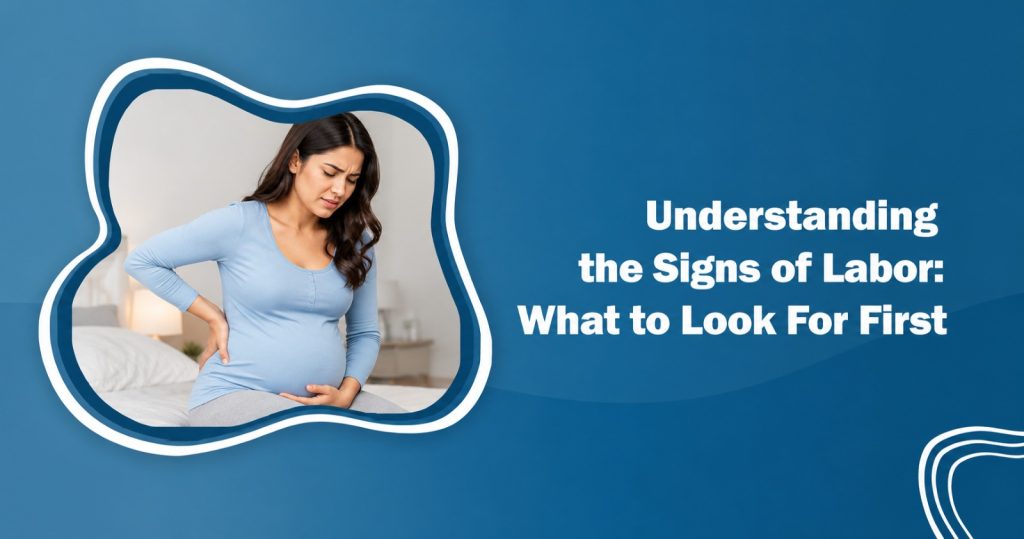
Signs of labor are the natural signals a woman’s body gives when it is getting close to childbirth. These signs can appear slowly or suddenly, and they help you to understand that the body is preparing for delivery. Every woman experiences them differently, and sometimes they can feel similar to normal late-pregnancy changes, which is why knowing them is helpful.
In this blog, we will mention everything to give you a clear idea about this topic. It’s important to know about the signs of labor to make the experience easier, less stressful, and more predictable. We will explain everything in detail, including early hints, important symptoms to notice, and when to reach the hospital.
What is Labor?
Labor is the natural process by which your baby moves out of the uterus and is born. It sounds straightforward, but your body actually does an enormous amount of quiet preparation before this process officially begins. During labor, your uterus contracts rhythmically, your cervix softens and opens, and your baby slowly descends through the birth canal. This can take anywhere from a few hours to a full day, and sometimes longer for first-time mothers. Labor is typically divided into three stages: early labor and active labor until the cervix reaches 10 cm, the pushing phase when the baby is born, and finally the delivery of the placenta. Labor usually begins between 37 and 42 weeks of pregnancy. Before 37 weeks it is considered preterm. Your doctor will monitor you closely in the final few weeks to make sure nothing is missed.
What are the Signs of Labor?
Your body does not switch into labor mode all at once. It prepares gradually, and many of these preparations begin days or even a week or two before active labor starts. Here are the most important signs to watch for:
- Regular contractions that grow stronger and closer together overtime
- Lower back pain or a deep pelvic pressure that does not go away with rest
- Water breaking — either a sudden gush or a slow, steady trickle of fluid
- Your cervix beginning to thin out and open (effacement and dilation)
- Passing the mucus plug or noticing a pink or slightly bloody discharge
- Your baby dropping lower into your pelvis (also called lightening)
- Sharp, shooting pelvic pain known as lightning crotch
- Loose stools or frequent bathroom trips caused by hormonal changes
Not every woman will experience all of these signs, and some may only notice one or two before labor fully begins. That is completely normal.
Major Symptoms That Show Labor Has Started
When labor begins, the body starts giving natural signals that the baby is ready to arrive. These changes can appear slowly or suddenly, but together they help you to understand that labor has started. Every woman experiences them differently, but paying attention to these signs of labor can help you know when it’s time to call your doctor or visit the hospital.
Here are some major symptoms that show labor has started
- Regular contractions that get stronger, closer together, and do not go away with rest.
- Water breaking, which may feel like a sudden gush or a slow trickle of fluid.
- Bloody show, a pink or slightly bloody discharge as the mucus plug comes out.
- Intense lower back or pelvic pressure as the baby moves downward.
- Cervical changes such as dilation that is noticed during a checkup.
- Sudden burst of energy or unusual tiredness before labor starts.
- Loose stools or mild nausea due to hormonal changes preparing the body for birth.
False Labor vs. True Labor
Sometimes the body gives mixed signals in the final weeks of pregnancy and this makes it difficult to understand whether labor has actually started. Many women feel tightening, pressure, or discomfort that feels similar to contractions. So, it’s important to know the difference between false labor and true labor to help you stay calm and recognize the real signs of labor when they start.
| Point | False Labor (Braxton Hicks) | True Labor |
| Pattern | Irregular, no fixed timing | Regular, gets closer over time |
| Intensity | Mild and doesn’t increase | Becomes stronger and more intense |
| Effect of Rest/Movement | Stops with rest, water, or position change | Continues even if you rest or move |
| Pain Location | Mostly in the front of the belly | Starts from the back and then it moves to the front |
| Other Signs | No water breaking or bloody show | May include water breaking, bloody show, pelvic pressure |
How Your Body Prepares for Labor
In the final weeks of pregnancy, particularly from week 36 onward, your body is quietly running a series of preparations that most women do not fully notice until they look back.
- Your cervix softens, thins out, and begins to efface — this is called effacement
- Your baby drops deeper into your pelvis, making breathing easier but increasing bladder pressure
- Your joints and ligaments loosen slightly to widen the birth canal
- Mild, irregular contractions begin as your uterus practices for the real thing
- Vaginal discharge may increase slightly and become more watery or pinkish
- A burst of nesting energy may hit — a strong hormonal urge to clean and organize everything
These changes do not all happen on the same day, and not every woman notices all of them. But together they paint a picture of a body doing exactly what it is supposed to do.
Signs of Labor in First-Time Moms vs. Second-Time Moms
Your experience of labor will likely look different depending on whether this is your first pregnancy or a subsequent one, and knowing this can save you from unnecessary anxiety.
For first-time mothers, the body tends to progress more slowly. Early labor can last several hours or even a full day. Your cervix needs more time to efface and dilate from zero. You will generally have more advance warning and more time to prepare before needing to leave for the hospital.
For second-time mothers, the cervix has been through this before and tends to dilate much faster. You may find yourself in active labor before you expected it. Many doctors advise second-time mothers to leave for the hospital earlier, around 7 to 10 minutes between contractions rather than waiting for the 5-1-1 rule. Discuss your specific situation with your OB-GYN before your due date.
Signs of Preterm Labor — When to Act Early
Preterm labor is labor that begins before 37 weeks of pregnancy. Recognizing it early is crucial because timely medical care can sometimes slow or stop it, giving your baby more time to develop.
Warning signs of preterm labor include contractions that come more than four times in an hour before 37 weeks, persistent lower back pain or pelvic pressure before your due date is near, a sudden change in vaginal discharge such as watery or bloody fluid, or simply a feeling that something does not seem right.
If you experience any of these signs before 37 weeks, do not wait and see. Call your doctor immediately or go to the nearest hospital.
When to Go to the Hospital
This is the question almost every pregnant woman and her partner loses sleep over. The answer is clearer than you might think. For First-Time Mothers Follow the 5-1-1 Rule: contractions 5 minutes apart, each lasting 1 minute, consistently for 1 hour. At this point, call your doctor and head to the hospital.
Go Immediately If:
- Your water breaks, regardless of whether contractions have started
- You are bleeding heavily — soaking a pad in under an hour
- The fluid from your water breaking is green or brown in color
- Your baby’s movements have significantly slowed or stopped
- You have a severe headache, blurred vision, or sudden swelling in your face or hands
- Something simply feels wrong — trust your instincts
For second-time mothers, your doctor may advise you to leave for the hospital a little earlier. Have this conversation before your due date so there is no confusion when the moment actually arrives.
When to Go to the Hospital
It’s important to know the right time to go to the hospital for a safe and smooth delivery. Labor can start slowly or suddenly, and it’s normal to feel unsure about when to leave home. You should head to the hospital when you notice strong and regular contractions, water breaking, or a combination of other signs of labor like pelvic pressure or bloody show. If you are unsure, it is always better to call your doctor for guidance. Reaching the hospital at the right time ensures you get proper medical support for both you and your baby.
Tips to Stay Calm and Prepared
Staying calm before and during labor is important because it helps your body to work more smoothly and keeps your mind relaxed. There are many women who feel nervous at this stage, but a little preparation can make a big difference.
Simple tips to stay calm and prepared:
- Pack your hospital bag early with all important items.
- Practice deep breathing to reduce stress and stay relaxed.
- Stay hydrated and eat small, light meals if advised by your doctor.
- Talk to your partner or support person to feel emotionally supported.
- Try gentle walking or stretching to ease discomfort.
- Avoid stressful thoughts or stories related to labor.
- Rest as much as possible to save energy for delivery.
Final Words
The signs of labor are your body’s way of telling you that one of the most significant moments of your life is almost here. Learning to recognize them is not about predicting the future — it is about feeling prepared, calm, and confident when the moment finally arrives.
Every woman’s labor story is different, and yours will be too. Some signs will come early; some may not come at all. What matters most is that you know what to watch for, you know when to call your doctor, and you know that your body is doing exactly what it was designed to do.Keep your hospital bag packed, your doctor’s number close, and your support person nearby. You have done nine months of preparation for this. You are more ready than you think.
Frequently asked questions (FAQs)
1. Do all women experience the same signs of labor?
No. Every pregnancy is different. Some women notice several signs of labor, while others experience only a few before labor begins.
2. Are Braxton Hicks contractions a sign of real labor?
No. Braxton Hicks contractions are practice contractions. They are usually irregular and often stop with rest, hydration, or a change in position. True labor contractions become stronger, more regular, and do not go away.
3.What does it feel like when the water breaks?
It may feel like a sudden gush of fluid or a slow, steady trickle. If you think your water has broken, contact your doctor for guidance.
4. How long does early labor last?
Early labor can last several hours or even a full day, especially for first-time mothers. During this time, try to rest, stay hydrated, and monitor your contractions.
5. Can signs of labor start at 37 weeks?
Yes. A pregnancy is considered full-term at 37 weeks, and labor can begin naturally at this stage.